Three Flannel Shirts, Judged by the Numbers the Label Actually Publishes
Three flannel shirts compared on brushing, published fabric weight and care instead of marketing adjectives — one budget cotton, one premium cotton, one wool outlier.
A flannel shirt is sold on softness, and softness is the one property every listing claims. What separates shirts a year in is elsewhere: whether the nap survives a bag strap, whether the collar holds its shape, whether the cloth shrinks at the shoulder seam. None of that appears in a product photo. What does appear, on the better listings, is a small set of checkable numbers — fibre content, brushing count, sometimes a fabric weight — and those numbers do most of the predicting.
What brushing does and why it decides the shirt
Flannel is not a weave. It is a plain or twill weave of cotton or wool that has been brushed — passed over drums of fine wire points that pull fibre ends up from the yarn into a nap. The nap is what the hand reads as soft, and it is also what traps air, which is why flannel is warmer than the same cloth unbrushed.
Brushing can be done on one face or both, and once or several times. Each pass raises more fibre and softens the cloth further, and each pass also weakens the yarn surface slightly, which is the trade-off nobody prints. A cloth brushed on both faces feels plusher against skin and a tee underneath, but it is also the cloth whose surface pills first where friction concentrates.
The direction of the claim matters. When Uniqlo says its flannel is triple-brushed inside and out, that is a process description, checkable against the hand. When a listing says only “super soft”, nothing is being specified at all. The process words — brushed, double-brushed, yarn-dyed — are the cheapest reliable signal on the page, because they describe construction that someone had to actually do.
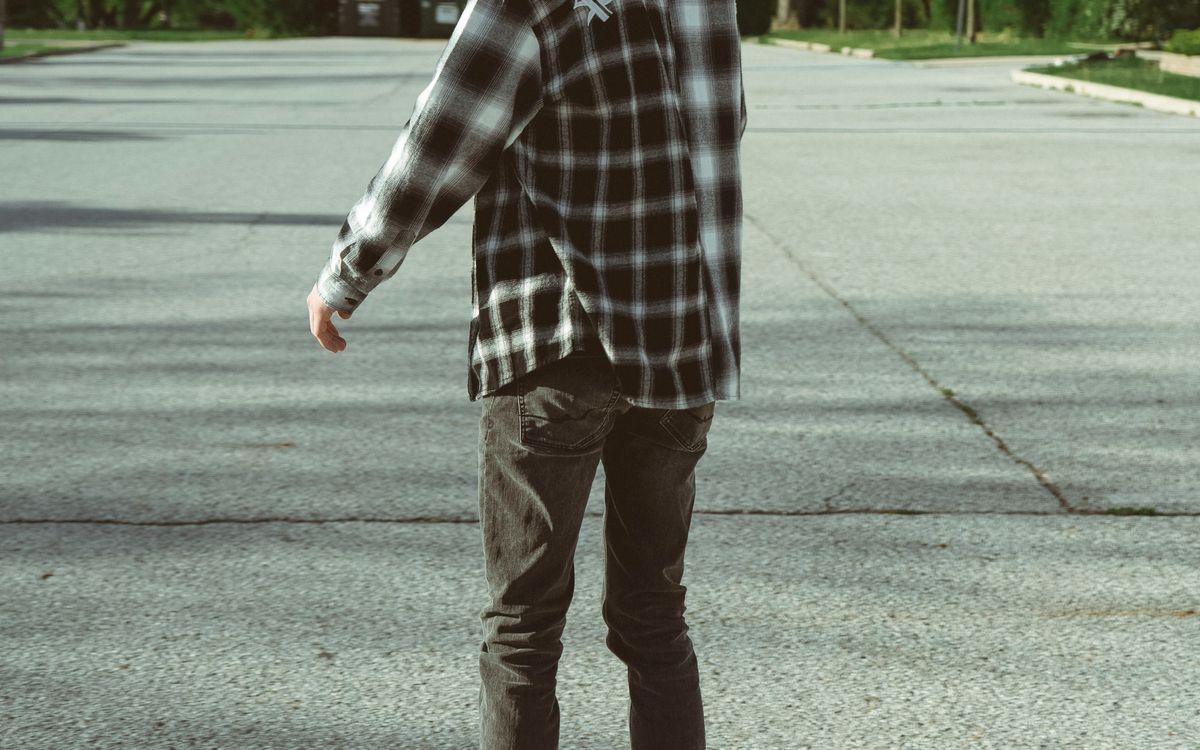
The oversized cut reads casual, but the check is yarn-dyed — the colour is in the yarn, not printed on the surface.
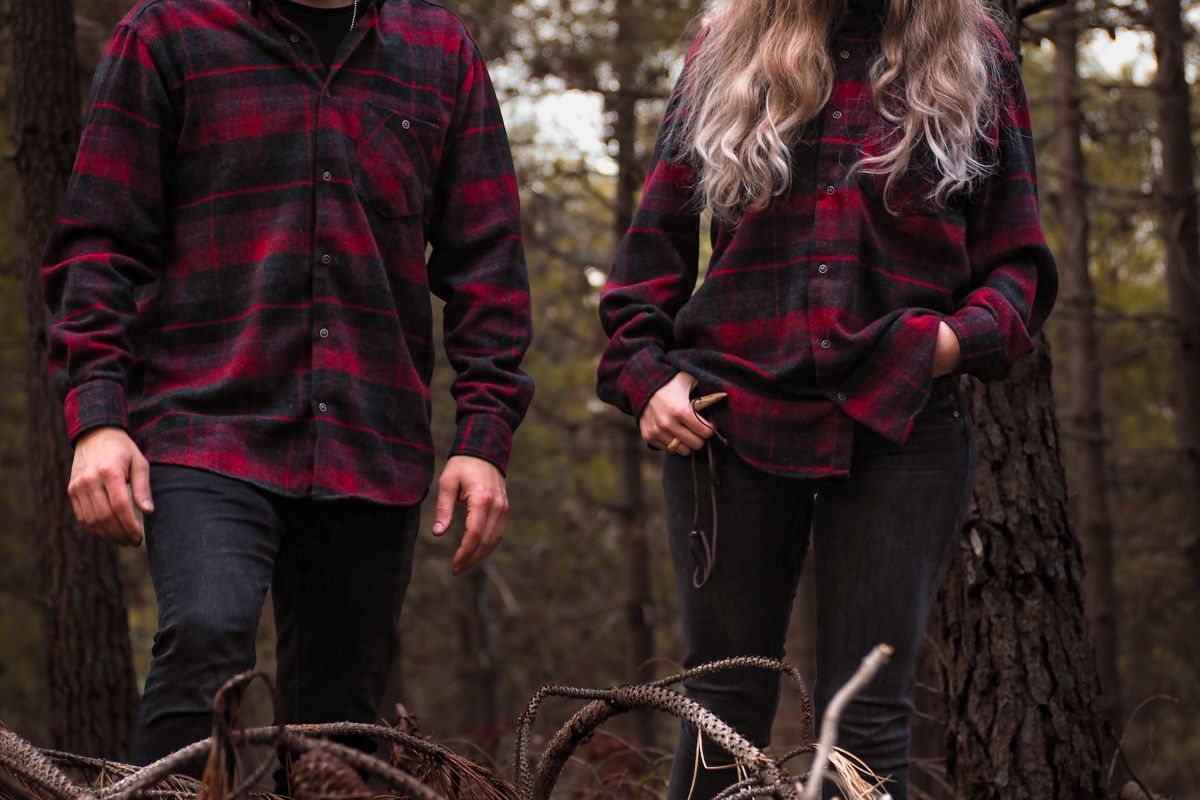
Yarn-dyed is the second term worth hunting for. A checked flannel whose pattern is yarn-dyed has colour through the whole yarn, so fades arrive slowly and evenly. A printed surface flannel loses its pattern where the nap abrades, and the difference shows up around the cuffs and collar within a season.
Weight is the one number most listings hide
Fabric weight, in ounces per square yard or grams per square metre, is the figure that best predicts how a flannel behaves: warmth, drape, opacity, how it sits under a jacket. It is also the figure least often published. Brands that buy cloth from named mills print it; brands that buy finished garments from unspecified sources usually do not.
L.L.Bean publishes the weight of its Scotch Plaid cloth at 5.5 oz, which lands in the light-to-mid band for shirting flannel and explains the shirt’s reputation as a layer piece rather than a coat substitute. Heavier shirting flannels run 7 to 8 oz and read almost as jacket substitutes; lighter ones drop under 4 oz and go sheer against light. Where a listing gives no figure, the opacity check from the white tee guide applies here too, because the mechanism is identical: density decides what shows through.
The same 5.5 oz figure explains another behaviour. Light-to-mid flannel drapes; heavy flannel stands. A shirt meant to be worn under a chore coat or over a tee wants the lighter cloth, and a shirt meant to be the outer layer on a dry autumn day wants the heavier one. Buying in the wrong band is the most common flannel mistake, and no adjective on a listing corrects for it.
The three shirts
L.L.Bean Scotch Plaid Flannel Shirt is the premium cotton pick, in 100% Portuguese cotton yarn-dyed to registered tartans, with the brand’s published 5.5 oz weight and a retailer listing showing 4.6 from about 1,900 reviews as of November 2026.
Pendleton Plaid Board Shirt is the wool outlier, cut from 100% pure virgin wool woven in the company’s own Oregon mills, machine-washable by specification, listed from USD 169 depending on colourway.
Uniqlo Flannel Checked Long-Sleeve Shirt is the budget pick, in 100% cotton triple-brushed on both faces, updated this season with a thicker yarn and a slightly relaxed body, listed at USD 29.90 with a product-page rating of 4.5 from 28 reviews.
Where they differ in practice
The Uniqlo shirt’s spec sheet is the most complete of the three for its price: fibre content, brushing count and fit description all appear on the product page. What it does not publish is weight, so warmth has to be judged from the thicker-yarn note and customer photos. The triple brushing makes it the softest straight out of the bag, and that same plush surface is the one most likely to fuzz at the side panels where a backpack sits. At USD 29.90 the arithmetic is forgiving — the shirt can be replaced twice a year and still cost less per season than either of the others.
The L.L.Bean shirt spends its extra price on cloth rather than features. There is no stretch, no pocket cargo and no snap placket on the standard version; the value is in the yarn-dyed tartan, the published weight and a nap the brand claims is brushed eight times per side. The retailer listing’s 4.6 aggregate across roughly 1,900 reviews is the largest sample of the three, and the fit runs slightly fitted through the waist per the brand’s own sizing note — worth checking against the chest fit criteria before choosing a size.
The Pendleton is not cotton flannel at all, and that is the point of including it. Wool is warmer per ounce than cotton, keeps insulating when damp, and resists odour, so the shirt carries more wears between washes. The Board Shirt’s wool is specified machine-washable, cold and gentle, line dry — an unusual allowance that removes the dry-cleaning cost most wool shirts carry. The listed price runs from USD 169 to USD 219 by colourway, and the shirt reads as a light jacket substitute; the square hem and bias-cut pockets are surf-era details, not features that change care or warmth.
| Fibre | Published weight | Brushing | Price | |
|---|---|---|---|---|
| Uniqlo Flannel Checked Long-Sleeve Shirt | 100% cotton | Not published | Triple-brushed, both faces | USD 29.90 |
| L.L.Bean Scotch Plaid Flannel Shirt | 100% Portuguese cotton | 5.5 oz | Brushed both faces | USD 59.95 |
| Pendleton Plaid Board Shirt | 100% virgin wool | Midweight per listing | Napped wool face | From USD 169 |
The practical read: Uniqlo wins on published construction per dollar, L.L.Bean wins on published weight and rating sample, Pendleton wins on warmth per ounce and wash convenience for a wool garment. None of the three cotton listings publishes a shrinkage figure, which moves that question to the care label.
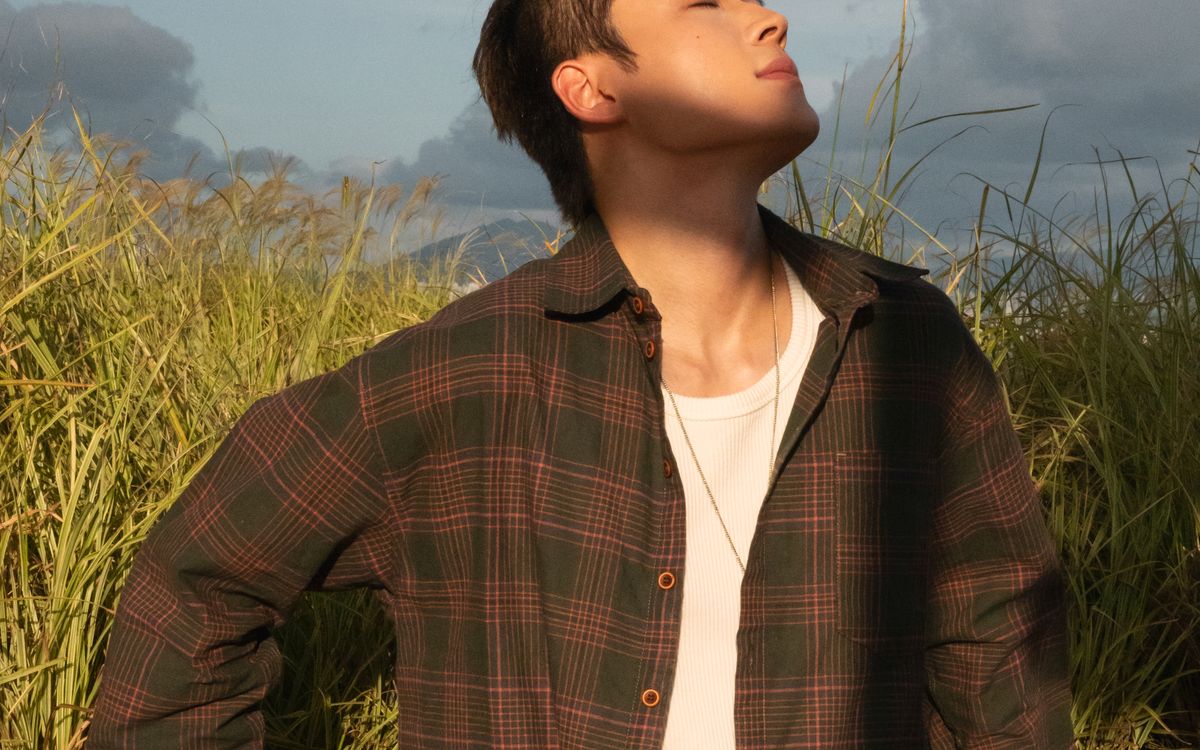
Worn open over a tee, a midweight flannel is doing layer work — the job the 5 to 6 oz band is sized for.
Shrinkage and where the collar ends up
Cotton flannel shrinks, and flannel shrinks slightly more than smooth poplin of the same weight because the raised nap relaxes further under heat and agitation. Most of the movement lands in the first three washes. A shirt that comes out of those with the collar still lying flat and the shoulder seam still at the shoulder edge is finished moving; one that has lost a half inch at the collar point will keep curling. The shrinkage mechanism is the same as for any cotton cloth, and the care labels on both cotton shirts here specify machine wash — Uniqlo’s cold, L.L.Bean’s machine wash and dry — which puts the outcome mostly in the dryer setting.
The wool shirt has a different failure mode. Heat plus agitation felts wool, which is why the machine-wash specification on the Board Shirt is a real differentiator rather than a footnote; a wool garment without that treatment costs dry-cleaning every few wears. The care symbols on the tag carry the decision, and they differ between these three shirts more than any marketing page suggests.
The check that a listing cannot do
Nap direction and density are visible in person and invisible on a page. Two checks settle it in a store. Rub a palm firmly across the cloth five or six times where the surface is plain — the inner sleeve placket is usually accessible — and look at the seam lines: a loosely brushed cloth shows fuzz drifting loose immediately, a dense one shows nothing. Then stretch the cloth toward the light the same way as for a tee; flannel hides more than poplin at equal weight because of the nap, but a thin cloth still opens into visible gaps.
Collar construction is the last check, because the collar is the first part of a flannel shirt to fail. A one-piece fall collar with fusible interfacing softens and waves within a season of hot drying; a two-piece collar with a sewn or stiffer interlining holds a line. The listing will not say which it is, but the product photos usually show enough of the collar angle to tell a constructed collar from a floppy one.
How the three shake out by job
For a first flannel or a multi-colour rotation at the lowest cost, the Uniqlo shirt is the rational buy, with the caveat that its unpublished weight makes warmth a photo-judgment. For one shirt worn constantly under or over other layers, the L.L.Bean’s published 5.5 oz and the large rating sample make it the predictable one. For dry cold, damp mornings or anyone who already owns the cotton shirts and needs the layer that keeps working between washes, the Pendleton occupies a different job title entirely.
First move: read the care label before the product description — machine-washable at the published weight is a stronger specification than any softness adjective, and it is the line that decides what the shirt costs per year rather than per purchase.
FAQ
- Does more brushing always mean a better flannel?
- Brushing raises the fibre nap that makes flannel soft, and brushing both faces of the cloth softens it inside and out. Beyond a point the extra nap adds warmth but also fuzz, and heavily brushed cloth pills faster where a bag strap runs. Brushing describes process, not durability, so treat it as one signal among several.
- Why do most flannel listings not publish a fabric weight?
- Weight in ounces or grams per square metre is a mill specification, and many brands buy finished cloth from mills that do not pass the figure along. Weight is the number that best predicts warmth, drape and opacity, so when a listing omits it, customer photos and the hand check in store are the remaining options.
- Can a wool shirt like the Pendleton be washed like cotton flannel?
- The specific shirt can — Pendleton specifies machine wash, cold, gentle cycle and line dry for its washable Umatilla wool. That is unusual for wool, which normally felts under heat and agitation. The care label decides here, not the fibre: a wool shirt without a machine-wash specification needs the same caution as a wool sweater.
Written by
Nora Finch
I started Dressing Time after one too many orders that came back in the wrong size. Everything here is built from published specifications, brand measurement charts and what owners actually report.
More in Everyday Wardrobe