How to Buy Clothes Online Without Returning Them
Buying clothes online without a return queue: measure yourself, read the size chart the brand actually uses, and trust the garment measurements over the label.
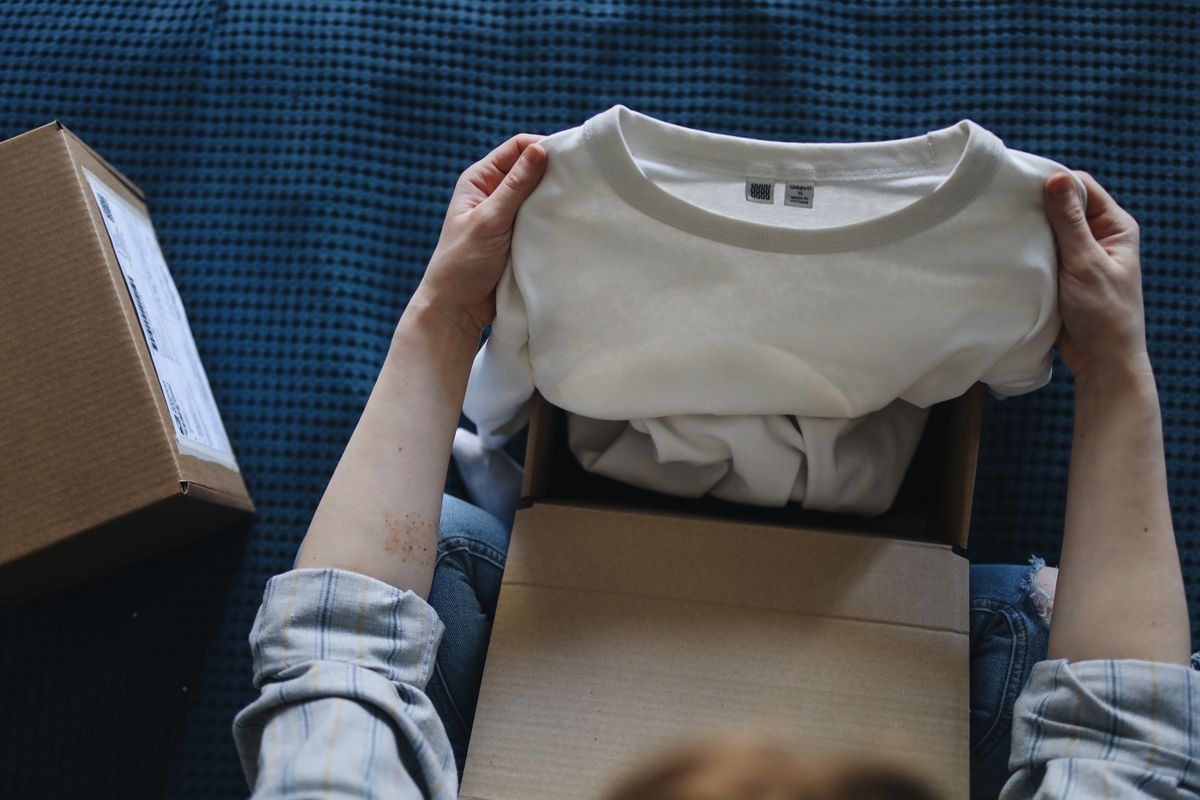
Buying clothes online without a return queue is a measurement problem, not a luck problem. The people who return the least are the ones who measured before the order, not the ones who ordered two sizes and kept one.
Measure a garment you trust
The fastest accurate number is not your body — it is a piece you already own and like. Lay a well-fitting shirt flat, measure pit to pit and the hem, write it down. Do the same for trousers: waist, thigh, and inseam. Those garment numbers are the yardstick, because how to read a size chart only works if you have something to read it against.
Then take the body measurements properly: chest, waist, hip, plus inseam for trousers and sleeve for shirts. The body chart tells you the intent; the garment you trust tells you the truth.
Choose the garment whose fit you would reproduce exactly if a patternmaker asked. Measure it flat on a hard surface, because carpet lets the tape sag and quietly adds centimetres. For a shirt: pit to pit across the front, hem width, back length from the collar seam down. For trousers: waist along the top edge, front rise, thigh at its widest, inseam from crotch seam to hem. Record the numbers the moment the tape comes off. A measured garment without a record gets measured a second time by the end of the session, and the second pass is where transcription errors enter.
Body measurements have one further use. When a listing gives only body sizes, the difference between your chest and the size’s chest is ease, and whether that ease suits the garment is a fit question of its own — what ease means in a garment separates the kind that drapes from the kind that pulls.
Read the chart the brand uses
Most returns come from trusting the label. Vanity sizing has moved the number on the tag away from the actual garment for years, and every brand moves it a different amount, so a 32 in one shop is not a 32 in another. The tag is the last thing to trust.
Brand charts are not consistent even within one shop. A brand’s knitwear line and its shirting line are often cut from different blocks, so a chart screenshot saved from last season’s order does not transfer. Open the chart on the product page being ordered from, every time, and check whether the numbers are centimetres or inches before comparing them to anything. Half the “this brand runs small” complaints online are a unit conversion nobody did.
What you want is the garment measurement column — the shirt’s chest, the trouser’s waist — not the body chart. A chart that gives only body sizes leaves you guessing the ease, so the measurements worth taking before you order are the ones you compare to the garment, not to the mirror.
Trust the garment over the label
When the listing gives garment measurements, buy the number, not the size name. If the shirt measures 54 cm pit to pit and your trusted shirt is 53, you are a match regardless of whether the tag says M or L. When the listing gives only body sizes, scale from the garment you measured and add the ease you know you like.
Tolerate differences in the right places. A centimetre at the hem is nothing. A centimetre at the bicep is a different shirt. Shoulders are the least forgiving of all, because tailoring can shorten a sleeve or take in a waist and cannot move a shoulder seam. How a shirt sits across the chest governs everything else, and how a shirt should fit across the chest is the reference for that judgment.
One more check that prevents most returns: read the fabric. A 100% cotton woven shirt shrinks; a knit with elastane recovers. The care label and the fibre decide whether the size that fits today fits after the wash, and that is the return nobody sees coming.
Let the fibre change the decision
Fabric content is not just a care question. It is a sizing question. Unwashed cotton wovens shrink noticeably on the first hot wash, and viscose is less stable still. Labels saying pre-washed or garment-washed mean the mill has done the shrinking already, which is why those pieces hold their size. Knits behave in the opposite direction: a ribbed cotton knit that feels snug on arrival relaxes into place after a wear, so a slightly tight rib is less alarming than a slightly tight woven. The care label decodes most of this before the order is placed, and reading it takes less time than the return takes.
The practical habit is to hold two different answers in your head at once: the size the garment is today, and the size it will be after its first wash. Order the second one, since that is the garment you will actually own.
Where returns actually come from
The returns pile has a shape. Shoulders and chests generate the exchanges no tailor can fix. Lengths get hemmed, so they generate alterations rather than returns. Shoes come back over width far more than length, because toe room gets judged standing still and re-judged the first time the foot slides forward on a hill. The pattern points where the measurements already pointed: spend the checking time where alteration is impossible.
Ordering two sizes and returning one looks like a shortcut. It behaves like a tax on attention, and it only works while every parcel is tried on in the same week. The method here replaces it with numbers that hold across shops and across seasons.
The policy is not a strategy
A generous return policy is a safety net, not a fitting method. Read it anyway, because the details differ where it matters: who pays return shipping, whether exchanges ship free, and when a final-sale window opens. Some free-returns promises deduct the original shipping from the refund, which changes the arithmetic on a small order. The policy is the price of the mistakes. The measurements above are how the mistakes stop happening.
The one step: keep a note of the three garment numbers you trust most, and only order the listing whose measurements match them.
FAQ
- What measurements do I actually need?
- Chest, waist and hip for most buys, plus inseam for trousers and sleeve for shirts. Measure a garment you already own and fits well, then compare those numbers to the listing — your body and the brand's body chart rarely agree.
- Why does the size label lie?
- Because vanity sizing has shifted the number on the tag away from the actual garment for years, and every brand shifts it differently. A 32 in one label is not a 32 in another, so the tag is the last thing to trust and the garment measurements are the first.
- Is a size chart enough on its own?
- Only if it lists garment measurements, not body measurements. A chart that tells you your body size but not the shirt's chest leaves you guessing the ease. When the brand gives only body sizes, measure a garment you trust and scale from that.
Written by
Nora Finch
I started Dressing Time after one too many orders that came back in the wrong size. Everything here is built from published specifications, brand measurement charts and what owners actually report.
More in Fit & Buying Guides