How Jeans Should Fit: Waist, Rise, Thigh, Hem
Four measurements decide whether jeans stay off the returns pile: waist, rise, thigh and hem, plus how much give to expect from raw denim.
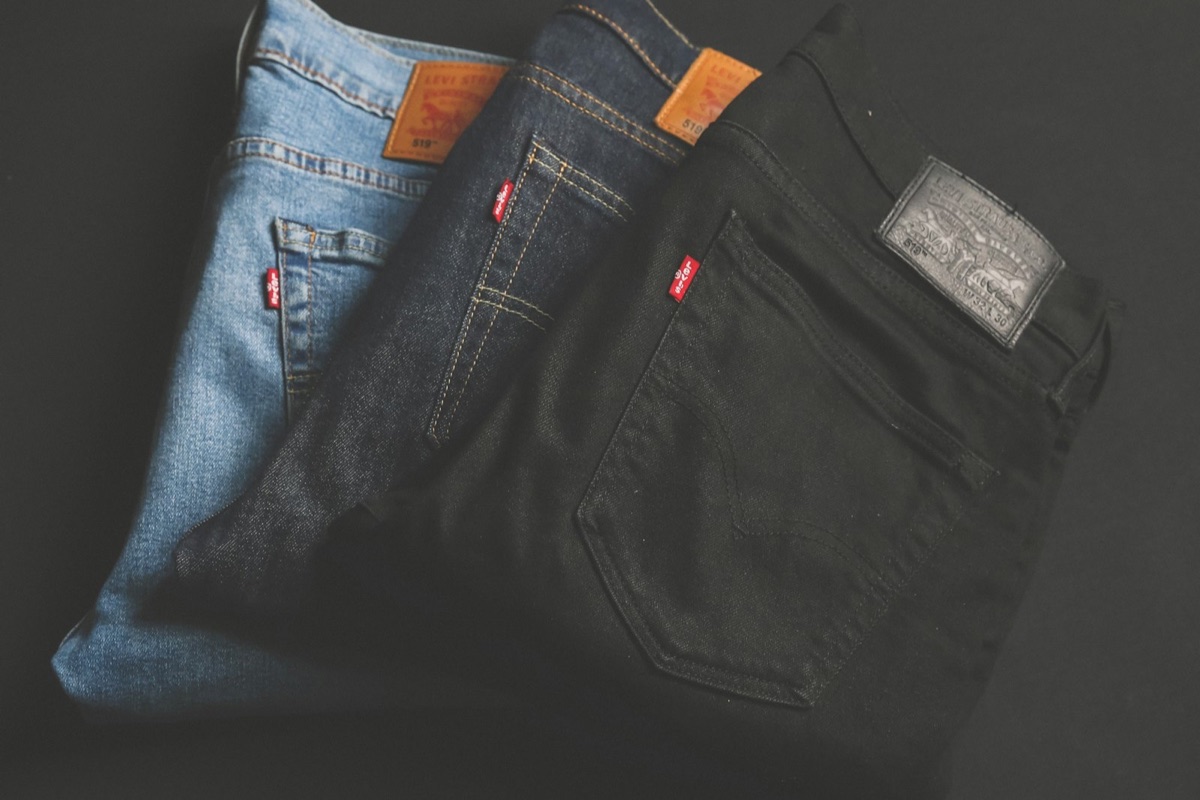
Two pairs of jeans tagged 32 can measure 32.5 inches at the waistband laid flat and doubled, or 34. Neither label is a lie, exactly. They are using different definitions of the same number.
Jeans are the category where the tag is least useful and the tape measure is most. Four numbers cover almost every fit failure.
Waist: measure the garment, not the label
Lay the jeans flat, fasten the top button, and measure across the waistband from edge to edge. Double it. That is the number the jeans actually are.
Compare it to a pair you already wear and like, not to your body. A pair that measures 33 flat but sits where you want it is a better reference than a size chart that says 32.
Then account for give. Most denim relaxes half an inch to a full inch at the waist over a day of wear, and it does not fully return after washing. Unsanforized raw denim shrinks on the first soak and then stretches back past where it started, which is why the sizing advice for raw denim sounds like folklore. It is not folklore; it is a fabric with a break-in schedule.
One test beats all of it: sit down. A waistband that gaps more than an inch at the small of your back when seated will gap worse after a meal, and a waistband that digs in when seated will not improve with wear.
Rise decides where they sit
Rise is measured from the crotch seam to the top of the waistband, front. Low rise runs about 8.5 to 9.5 inches, mid rise 10 to 11, high rise 11.5 and up.
The number only means something against your own torso. Two people with the same waist can need different rises because the distance from crotch to natural waist differs. If jeans consistently slide down at the back, the rise is short for you, not the waist too big. If they press into your stomach when you sit, the rise is too long or the waistband sits too high.
A related check: the crotch seam should sit close to your body without pulling. A crotch that hangs two inches low looks sloppy and wears through faster, because every step rubs the same fold of fabric.
Thigh and leg opening
Measure the thigh flat, one inch below the crotch seam, and double it. Slim cuts usually land at 22 to 24 inches, straight cuts at 24 to 26, relaxed at 26 and above.
This is the measurement that predicts the most returns, because it is the one nobody checks. A pair can fit perfectly at the waist and still be unwearable if the thigh is an inch tight, and no amount of waist adjustment fixes it.
Leg opening, measured across the hem, sets the silhouette. A 14-inch opening is a slim taper, 16 is a straight leg, 18 or more is a boot cut or a wide leg. That number interacts with shoe choice and with trouser break in the same way a dress trouser does.
Length before hemming
Jeans are usually sold in even inseams, and most people need an odd number. Buy for the thigh and waist, then have the length sorted. A hem is the cheapest alteration in clothing, often under fifteen dollars, and it is reversible in the sense that you can re-hem again if your taste changes.
Do not buy a pair that fits everywhere except the length and hope a cuff will hide it. A doubled cuff adds bulk at the ankle, shortens the leg line, and sits differently with every shoe.
For heavy denim, also check the fabric weight before committing. A 14-ounce jean behaves differently through the knee than a 10-ounce one, and the heavier cloth takes longer to relax.
The order to check
Waist flat and doubled, then seated. Rise against your own torso. Thigh one inch below the crotch. Leg opening at the hem. Length last, because it is the only one a tailor can fix cheaply.
If the jeans fail the thigh check, no alteration saves them. If they fail the waist by half an inch, wear will probably fix it. That ranking is worth remembering the next time a size chart offers you a single number and calls it a fit. Reading the chart properly starts with knowing which of its columns describes the garment and which describes you.
FAQ
- Should jeans be tight at the waist when new?
- Snug, not tight. Denim relaxes about half an inch to a full inch at the waist after a day of wear, and unsanforized raw denim can give closer to two inches after the first soak. If you can only fasten them lying down, they are a size small.
- Where should the waistband sit?
- Where it stays put when you sit down. A waistband should not gap more than an inch at the small of your back when seated, and it should not slide down when you stand up. Rise is the number that decides this, not the waist size.
- How do you measure the thigh on jeans?
- Lay the jean flat, measure straight across one leg one inch below the crotch seam, then double it. That figure, not the label, tells you whether the thigh will be tight. Slim cuts commonly measure 22 to 24 inches here; straight cuts 24 to 26.
Written by
Nora Finch
I started Dressing Time after one too many orders that came back in the wrong size. Everything here is built from published specifications, brand measurement charts and what owners actually report.
More in Fit & Buying Guides