Matching Metals in an Outfit: The Rule and the Three Exceptions
Metal hardware reads as one group when it sits close together. Where the line falls, why a two-tone watch changes it, and when mixing finishes actually works.
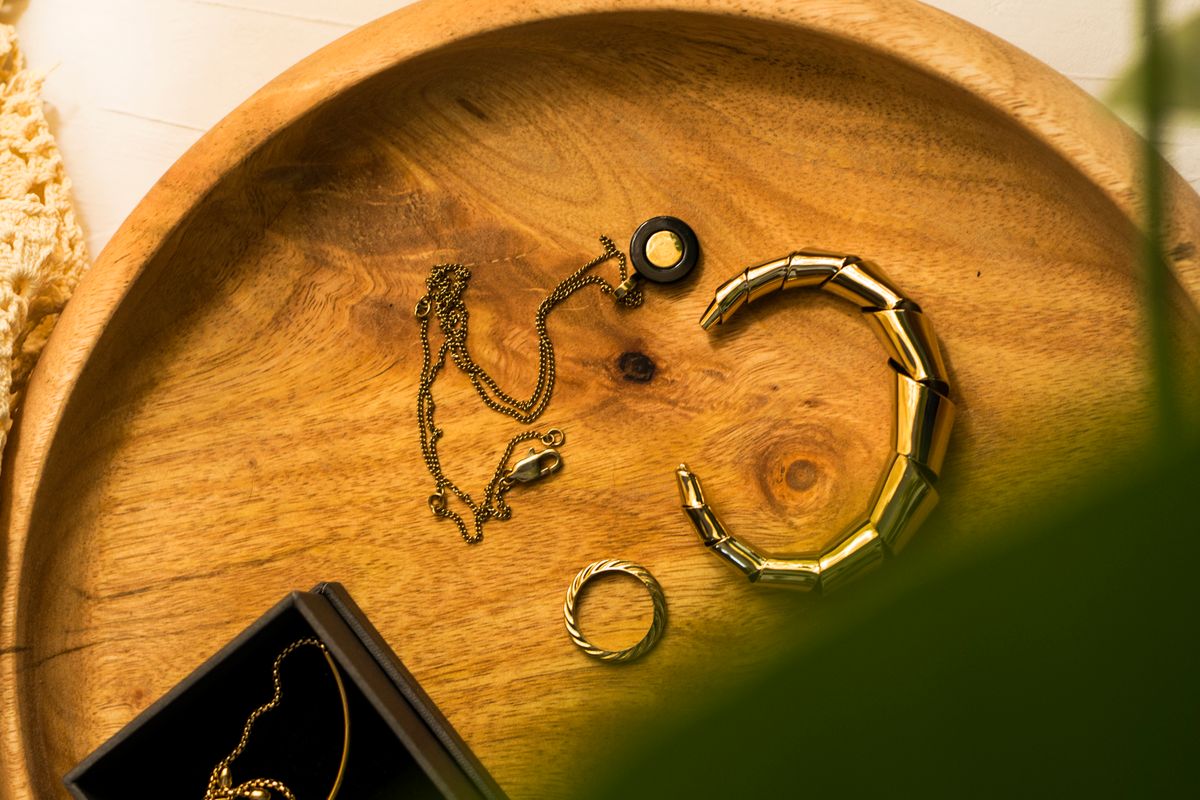
Matching metal finishes is treated as an advanced topic. It isn’t. The visible metal on most outfits is three or four small objects, and they either read as a set or they don’t.
The default: one finish per group
Hardware that sits close together on the body reads as one group. A belt buckle, a watch case and the metal on a bag strap worn at the hip fall inside that group, and they should share a finish. Brushed steel with brushed steel, brass with brass, matte black with matte black.
Finish matters more than the metal underneath. Polished chrome and brushed steel are both “silver” and still do not look like a set. Polished reads formal and shows every scratch; brushed reads quieter and hides daily wear.
Why the buckle and the watch are the pair that matters
They sit at roughly the same height, close enough that the eye connects them without effort. A brass buckle under a steel watch case reads as a mismatch from across a room, even though neither object is large.
The watch case is usually the piece that has already been decided, which makes the buckle the one to change. How large a case reads on the wrist is its own question, covered in the guide to watch case diameter and wrist size.
Leather adds a second constraint that runs in a different direction. A belt sits with the shoes, so the strap tone follows the shoe leather, while the buckle finish follows the watch. One object answering to two different systems — and width still has to clear the trouser loops first, which is the constraint laid out in the guide to belt width and trouser loops.
Three cases where mixing holds
A two-tone piece already contains both finishes. A case and bracelet in steel and gold is the common example. The object supplies its own bridge, and single-finish accessories on either side of it stay coherent.
Distance separates them. Metal at the wrist and metal at the ankle are never compared. Shoe hardware sits outside the group the watch belongs to, and so do most rings.
One finish dominates and the other repeats. A single warm accent among cool metal reads as a stray. The same accent appearing two or three times reads as deliberate — a brass buckle with a brass-cased watch is a pair; a brass collar pin alone among steel is not.
Where it breaks down
Plated finishes fail at different rates than the base metal suggests. Bright chrome and gold-tone plating over zinc alloy chip at the frame edges within a year of daily handling, and chipped plating under office lighting is more conspicuous than any finish mismatch it was meant to avoid. Solid brass, stainless steel and PVD-coated black hold their surface.
Mixing is also harder below the waist than above it. Two finishes around the face and hands read as styling; two finishes at the waistband read as an accident.
The one step: put the watch and the belt next to each other before getting dressed and change whichever is easier to change. The comparison takes five seconds and settles the whole question.
FAQ
- Can gold and silver be worn in the same outfit?
- Yes, but the two finishes should not sit at the same height. A steel watch with a gold buckle is close enough to look like a mistake; a gold ring with a silver watch is far enough apart that the eye does not compare them. A two-tone piece that contains both finishes is the cleanest way to carry them together.
- Should a belt buckle match a watch?
- In finish more than in metal. Brushed with brushed, polished with polished. The two are read as a pair because they sit at similar height on the body, so a bright gold buckle under a steel watch is the mismatch most likely to be noticed.
- Why does a two-tone watch make mixing easier?
- Because the piece already contains both finishes and supplies its own bridge. Any single-finish accessory worn away from the wrist stays coherent against it, since neither metal is being introduced as a new and unexplained element.
Written by
Maya Ellis
I started Dressing Time after one too many orders that came back in the wrong size. Everything here is built from published specifications, brand measurement charts and what owners actually report.
More in Accessories