Belt Width and Trouser Loops: The Constraint That Decides Everything Else
A belt cannot be wider than the loops it threads through. Where the dress and casual widths split, why buckle width is mechanical, and how belt colour follows shoes.
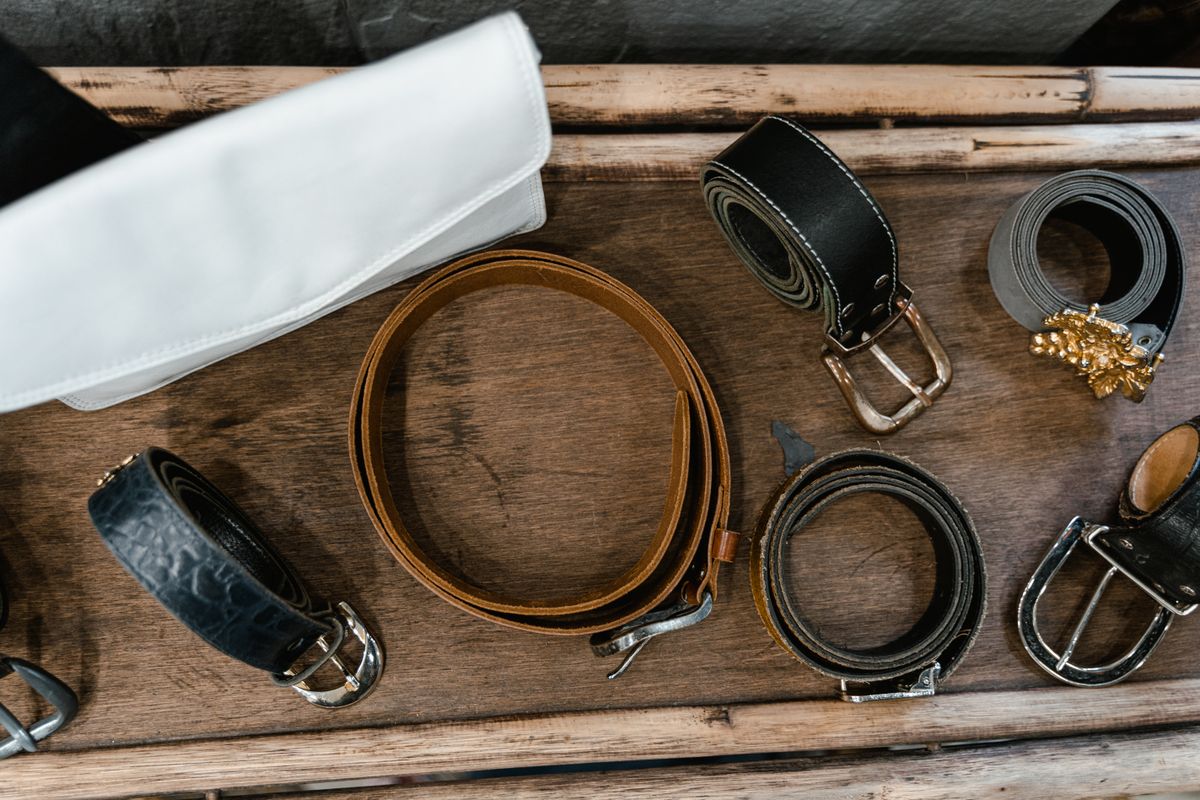
Belt width is the one accessory measurement with a hard physical limit. A 40 mm belt will not pass through a suit trouser loop cut for 32 mm, and forcing it produces a result nobody would call intentional. Every other consideration — formality, buckle proportion, leather colour — comes after that one.
The split: roughly 30 mm and roughly 38 mm
Dress belts sit between about 30 and 35 mm. Allen Edmonds publishes 35 mm (1.38 in) for its Wide Basic Dress Belt and markets it as a dress belt, which puts 35 mm at the wide end of that range. Casual belts for jeans, chinos and workwear sit around 38 to 40 mm.
Formality runs narrow. Loops on tailored trousers are cut narrow because the garment is formal; denim loops are cut wide. A belt that fills its loop without stretching it reads correct, one that has to be forced reads as an error, and one that floats loose inside a wide loop reads unfinished.
Why the loop is the limit
Belt manufacturers work to a rough compatibility table: dress trouser loops around 30 to 34 mm internally, chinos a little wider, jeans around 38 to 42 mm. Those figures come from trade practice rather than from any enforced standard — no body certifies belt-loop widths — which is exactly why a single “one belt for everything” purchase usually disappoints.
A 35 mm belt splits the difference. It threads cleanly through most dress and chino loops and looks thin in denim. Anything wider needs the trousers checked first, because the loop is the part that cannot stretch.
The reliable check is measuring the loop itself with a soft tape, inside the stitch line. That number is usually a few millimetres more than the belt the trouser was designed around. Measuring the thing in front of you is the same discipline that makes a size chart readable.
Buckle width is mechanical, not stylistic
The strap threads through the buckle’s bar, so the two have to match. A bar wider than the strap lets the leather shift sideways at the waist; a bar narrower than the strap will not accept it at all. This is why replacement buckles are sold by strap width — a 35 mm strap takes a 35 mm buckle, with no rounding.
Buckle face size is the part that is a taste call, and it scales with the strap: a low-profile frame on a 32 mm dress belt, a larger one on a 40 mm casual belt. An oversized face on a narrow strap tips forward and prints through a shirt.
Leather colour follows the shoes
Allen Edmonds states the matching logic on its own product pages: Coffee with Coffee footwear, Walnut with Walnut, Chili with Chili, Black with Black. The general form is that the belt tone follows the shoe tone in the same leather family rather than an exact dye match — a dark brown belt with tan shoes is a wider gap than a mid-brown one.
Black is the strict case: black belt, black shoes. Brown carries more range because brown leather itself varies. Stitching and edge finish are what separate “same family” from “close enough.”
The buckle’s metal finish is a separate decision that has nothing to do with the shoes. It answers to the watch, for the reason set out in the guide to matching metals across an outfit.
The one step: measure the loops on the trousers that get worn most, then buy to that number before considering colour or hardware.
FAQ
- What width is a dress belt?
- Roughly 30 to 35 mm. Allen Edmonds publishes 35 mm (1.38 in) for its Wide Basic Dress Belt, which sits at the wide end of the dress range; slimmer dress styles run closer to 30 mm. Casual belts for jeans and chinos sit around 38 to 40 mm.
- Why won't a wide belt fit suit trousers?
- Because the belt threads through the loops, and dress trouser loops are commonly cut with only a few millimetres of clearance over the belt they were designed for. A 40 mm belt through a 32 mm loop will not pass. There is no standard governing loop widths, so measuring the specific trouser is the only reliable check.
- Does a belt have to match shoe colour exactly?
- Matching the leather family is enough for brown; an exact dye match is not necessary and is often impossible across brands. Black is the stricter case: black belt with black shoes. The buckle finish is a separate decision that follows the watch rather than the shoes.
Written by
Maya Ellis
I started Dressing Time after one too many orders that came back in the wrong size. Everything here is built from published specifications, brand measurement charts and what owners actually report.
More in Accessories