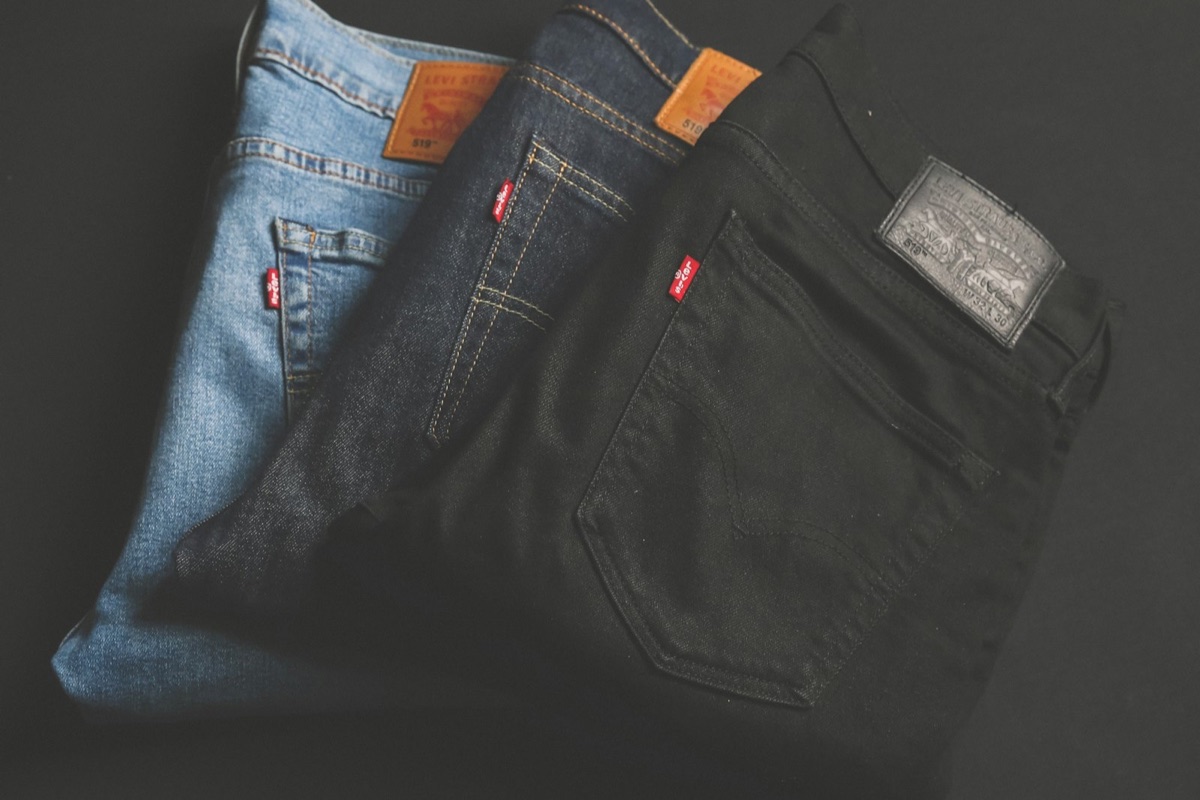
Trouser Rise Decides Where the Waistband Lands, and Most Listings Hide It
Front rise is the measurement that decides whether trousers sit at the waist or the hips — what the numbers mean, how the bands differ, and how to buy the rise you already wear.

Rise is the shortest measurement on a pair of trousers and the one that decides the most. It is the distance from the crotch seam to the top of the waistband, usually three to four inches shorter than the inseam, and it alone determines whether the waistband lands at the navel, below the belly or out on the hips. Two trousers with identical waist and inseam measurements can sit entirely differently because one has a 9-inch rise and the other an 11-inch one.
The three bands and where each one sits
Rise gets described with words — high, mid, low — but the words are not standardised, and the same word describes different measurements at different brands. The measurement underneath the words behaves consistently:
| Rise band | Front rise (typical adult range) | Where the waistband lands |
|---|---|---|
| Low | under ~9 in | On the hip bones, below the belly |
| Mid | ~9–11 in | A few centimetres below the navel |
| High | ~11 in and up | At or near the natural waist |
The bands move with garment size: a waist 40 trouser at mid rise carries a longer absolute rise than a waist 30 at the same label. That scaling is why the bands above are ranges rather than fixed lines, and it is also why a favourite pair from years ago fits differently at the same claimed size — the tag number drifted while the rise moved with it.
What the band buys is a different silhouette, not just a position. A high rise makes the leg read longer from the waistband down and pairs with a tucked shirt cleanly; a low rise shortens the torso visually and pulls the waistband toward the fullest part of the hips, where it stays only if the hip measurement is accounted for. Mid rise is the compromise most trousers are cut for, which is why it dominates the market and why deviations from it get called out in reviews.
Why the crotch seam punishes the wrong rise
Rise is not cosmetic. Sitting folds the body at the hip and shortens the front-of-body distance, so the crotch seam of a low-rise trouser has less fabric between waistband and seam to begin with — and when it pulls, it pulls at the exact point where the thighs meet the torso. Trousers cut with an insufficient rise for the body wear out at the crotch seam first, develop thigh gaps at the pockets, and drag the waistband down every time the wearer stands up.
This is why front rise and back rise are separate measurements. The back rise usually runs taller than the front, because the body needs more cloth over the seat than over the stomach. A trouser cut with equal front and back rise rides down at the back when bending, which no amount of correct waist sizing fixes. Product pages almost never publish back rise separately, but garment measurements that list only “rise” are referring to the front figure, and the back behaviour has to be judged from photos of the seat.
Ease in the seat and thigh is the same ease logic that applies to any garment, but rise is the multiplier: the same three inches of seat ease reads loose on an 11-inch rise and skimpy on a 9-inch one, because the lower rise distributes the same circumference across less vertical cloth.
Measuring the rise that already works
The fastest route to buying the right rise is measuring a pair already worn. Lay the trousers flat on a table, smooth the front, and measure from the crotch seam straight up to the top edge of the waistband. That is front rise. Write it down next to the waist measurement, because the pair of numbers together identifies the fit more precisely than any brand name.
One caution when measuring: workwear cuts and jeans with a long break and cuff can sag at the seat after washing cycles, and a washed-out pair measures shorter at the rise than it did new. Measure the least-worn pair in the drawer, or accept that the number carries a small error bar in the direction of shorter.
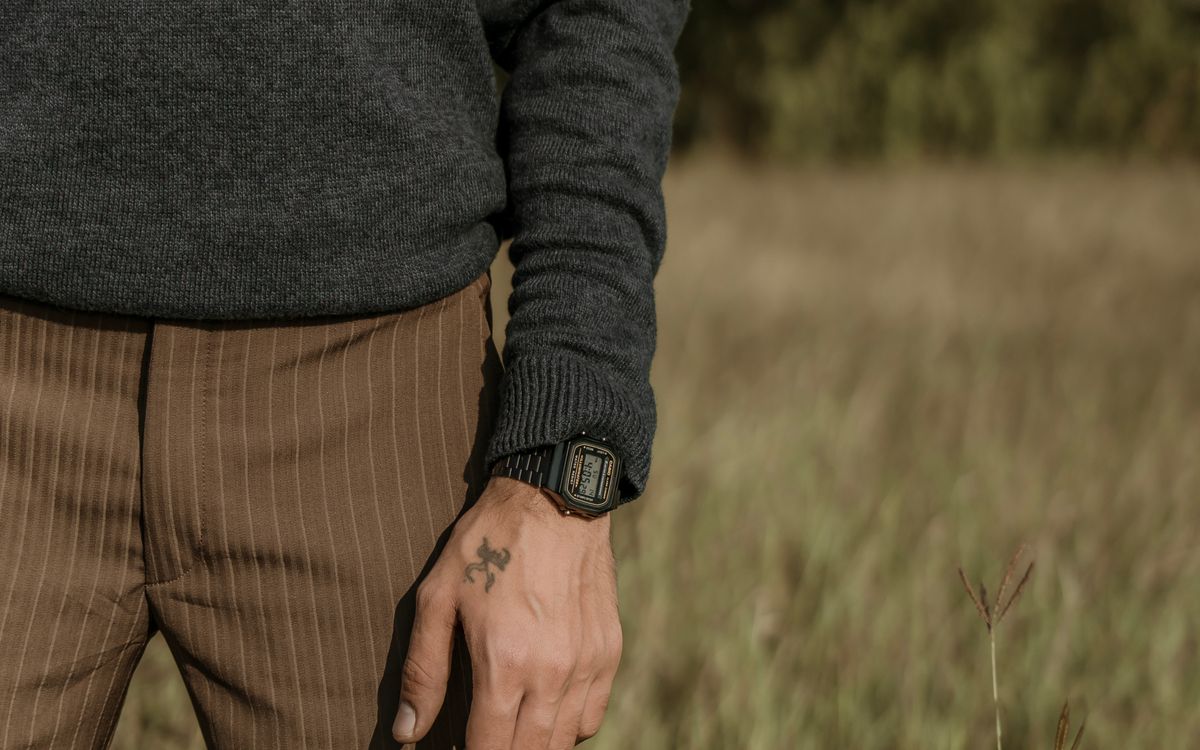
Where the cloth pulls and where it pools is rise made visible — the thigh seam line reports whether the crotch point sits far enough from the body.
What listings publish and what they withhold
Rise is the measurement most often missing from a product page. Inseam and waist appear in nearly every size chart because customers ask for them; rise appears on a minority of charts, and fewer still publish it per size rather than as one word in the fit description. The consequence is predictable: buyers anchor on waist and inseam, order, and discover the fit problem that rise actually governs.
When the figure is missing, two proxies recover it. Fit descriptions with body-position language — “sits at the waist”, “sits below the waist” — are usable as band labels even when the inches are absent. Customer photos taken seated or from the side are better than studio shots for judging whether the crotch seam hangs close to the body or stands off it, and the same photo-reading discipline that judges fit from measurements applies here with the caveat that lighting hides more on trousers than on tops.
Jeans deserve one extra note. Denim at heavier weights stands off the body until it breaks in, so a rigid heavyweight jean reads a half-size looser at the rise on day one and settles lower after weeks of wear — the denim weight changes how the rise behaves, even though the measurement itself never moves.
When rise decides the purchase
Three cases make rise the deciding number rather than a supporting one. Tucking a shirt cleanly wants a high-enough rise that the waistband holds the shirt without re-tucking; hip-slung trousers dump a tucked hem within an hour. Wearing trousers with suspenders or belt loops spaced for a particular waistline position assumes the rise those accessories were bought against. And anyone who has owned a pair that fit perfectly everywhere except a pulling crotch seam is wearing a rise problem wearing a size problem’s clothing.
First move: measure the front rise on the best-fitting trousers in the drawer tonight, and refuse any listing that cannot state its rise in inches or name its waistband position in words — a page that hides the one measurement that governs the fit is asking to be returned.
FAQ
- What is a normal front rise for everyday trousers?
- There is no enforced standard, but the trade clusters mid rise around 10 to 11 inches on the tag for most adult sizes, high rise from roughly 11 inches up, and low rise below about 9. The bands shift with size and brand, which is why a rise measured on trousers already owned beats any label word.
- Does rise change the size I should buy?
- It changes where the waistband sits, which changes the waist circumference it wraps. A high rise sits near the natural waist, where most bodies measure smaller than at the hips, so the same body can need a different trouser waist size at high and low rise. Fit charts that state rise in inches make this checkable before ordering.
- Why do high-rise trousers feel tighter when sitting?
- Sitting compresses the distance from hip bone to waist, so a waistband at the natural waist has less room to give than one lower on the hips. Well-cut high-rise trousers add seat room and a higher back rise to compensate; a pair cut as a straight cylinder at any rise will pull at the waist when seated.
Written by
Nora Finch
I started Dressing Time after one too many orders that came back in the wrong size. Everything here is built from published specifications, brand measurement charts and what owners actually report.
More in Fit & Buying Guides