How a Sweater Should Fit Without Looking Borrowed
Shoulder seam, chest ease, hem length and cuff, in the order that matters. Plus how much a knit relaxes with wear and why the size chart oversells the fit.
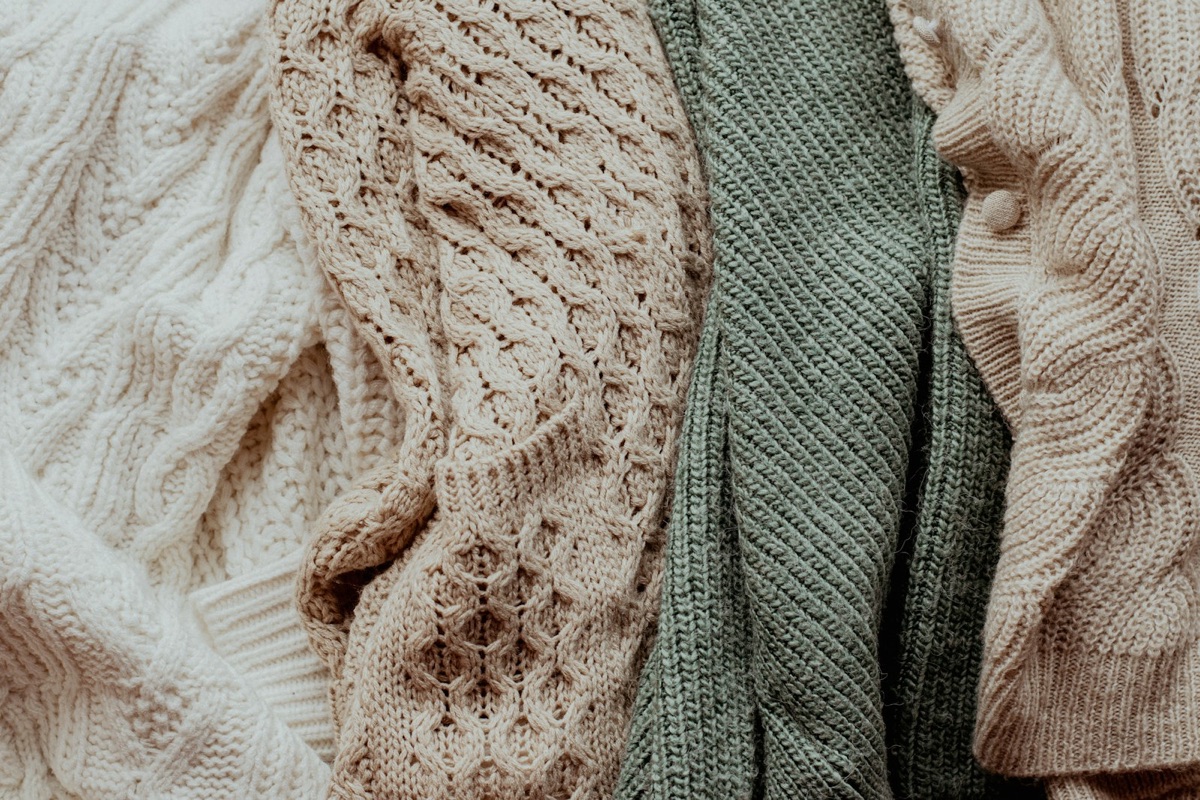
A sweater is the only garment in the closet that gets larger after you buy it. Not by much, and not permanently, but enough that a knit which fits in the mirror at 8 a.m. can look tired by dinner. Wool relaxes under its own weight, and every size decision you make should account for it.
The rest is ordinary fit logic, applied in a specific order.
Shoulder first, always
On a set-in sweater, the shoulder seam should sit at the bony point where your shoulder turns into your arm. Not past it, not inside it.
A seam that drops down the arm is not automatically wrong. Drop-shoulder knits are cut that way on purpose, and the seam is supposed to sit an inch or two below the natural shoulder. What matters is that the armhole follows. A drop shoulder with a high, tight armhole pulls the whole sweater up when you raise your arms.
Raise both arms and watch the hem. If it climbs more than an inch, the armhole or the chest is too small. That test costs five seconds and catches most bad sweaters before the tag comes off.
Chest ease by gauge
A sweater needs more room than a shirt, and the amount depends on the knit.
| Knit | Ease over chest | Behaviour |
|---|---|---|
| Fine-gauge merino | 2–3 in | Follows the body, shows a shirt collar |
| Mid-weight wool | 3–4 in | Hangs straight, layers over a shirt |
| Chunky cable or lambswool | 4–6 in | Holds its own shape, bulky under a jacket |
Ease is the difference between your chest measurement and the garment’s. Since most charts list the garment measured flat and doubled, you can compare directly: a sweater listing 42 inches across the chest on a 40-inch chest gives two inches of ease.
Below two inches, a knit pulls across the chest and the seams distort. Above six, the shoulders slide and the hem flares. Neither is fixed by washing.
Body length and the waistband question
For a standard crewneck or V-neck, the hem should land at the hip bone. In practical terms, it covers the waistband of your trousers without reaching mid-fly.
A hem that stops above the waistband shows a strip of shirt or skin every time you move, and it makes the torso look shorter than it is. A hem that reaches the thigh reads as a tunic and throws off the proportion between top and leg.
Ribbed hems change the calculation slightly. A deep rib hugs the hips and holds the sweater down; a shallow rib rides up. If the rib is more than about two inches deep, expect the sweater to sit higher than its measured length suggests.
Sleeves and cuffs
The sleeve should end at the wrist bone, with the ribbed cuff covering the wrist and reaching the base of the thumb. When your arms hang, the cuff should not bunch at the hand.
Cuff condition is the fastest way to judge a knit in a store. Stretch the cuff gently and let go. A good rib snaps back. A tired one stays stretched, which means the sweater has either been tried on too many times or the elastane has given up.
If the sleeves are an inch long, a tailor can shorten a sweater at the cuff, but only if the cuff is a separate piece. Re-knitting a sleeve is not a real alteration. This is one of the few categories where you should refuse to buy long and fix later. How a blazer should fit makes the same point about the shoulder: some parts are structural, and the price of altering them exceeds the garment.
How much a knit grows
Expect half an inch to a full inch of relaxation in the body and sleeves over a day of wear, more in heavy lambswool, less in a tight merino. Most of it comes back with a wash and flat drying.
Two habits cost sweaters their shape. Hanging a wet knit stretches the shoulders into points that never come out. Washing in hot water and tumbling is worse; why clothes shrink explains the mechanism, and a sweater is the garment where the damage is least reversible.
Pilling is a separate matter of fibre length and abrasion, covered in the guide to knitwear pilling. It is not a sign of poor fit, though a sweater that rubs at the armpits will pill there first.
The short version
Shoulder seam at the shoulder, two to six inches of chest ease depending on gauge, hem at the hip bone, cuff at the wrist bone, and one size of relaxation built into your expectations. Buy the size that fits on the hanger, not the size you hope will shrink into place.
FAQ
- How much ease should a sweater have across the chest?
- Two to three inches over your body measurement for a fine-gauge merino, three to four for a mid-weight knit, and four to six for a chunky cable. Less than that and the knit pulls at the armpits; more and the shoulders slide out of place.
- Why does my sweater get bigger during the day?
- Knitted wool relaxes under its own weight and the tension of wear, so a sweater can grow half an inch to an inch in the body and sleeves by evening. Washing and drying flat restores most of it. Hanging a wet sweater stretches it permanently.
- Should the hem of a sweater cover your waistband?
- Yes, for crewnecks and most pullovers. The hem should land at the hip bone and cover the trouser waistband without reaching mid-fly. A cropped knit is a deliberate style with a higher hem, not a fit failure, but it needs higher-rise trousers to work.
Written by
Nora Finch
I started Dressing Time after one too many orders that came back in the wrong size. Everything here is built from published specifications, brand measurement charts and what owners actually report.
More in Fit & Buying Guides