T-Shirt Neckline Types and What They Do to Fit
Crew, vee, scoop, boat and henley necklines frame the face and shoulders differently. What the collar rib is made of, and why it goes wavy after washing.
The neckline is where a t-shirt fails first and where it frames the wearer most. Five shapes cover almost everything on sale — crew, vee, scoop, boat and the henley placket — and the collar itself is a different fabric from the body of the shirt. Both facts explain most of what goes right and wrong at the neck.
The five necklines, and what each one does
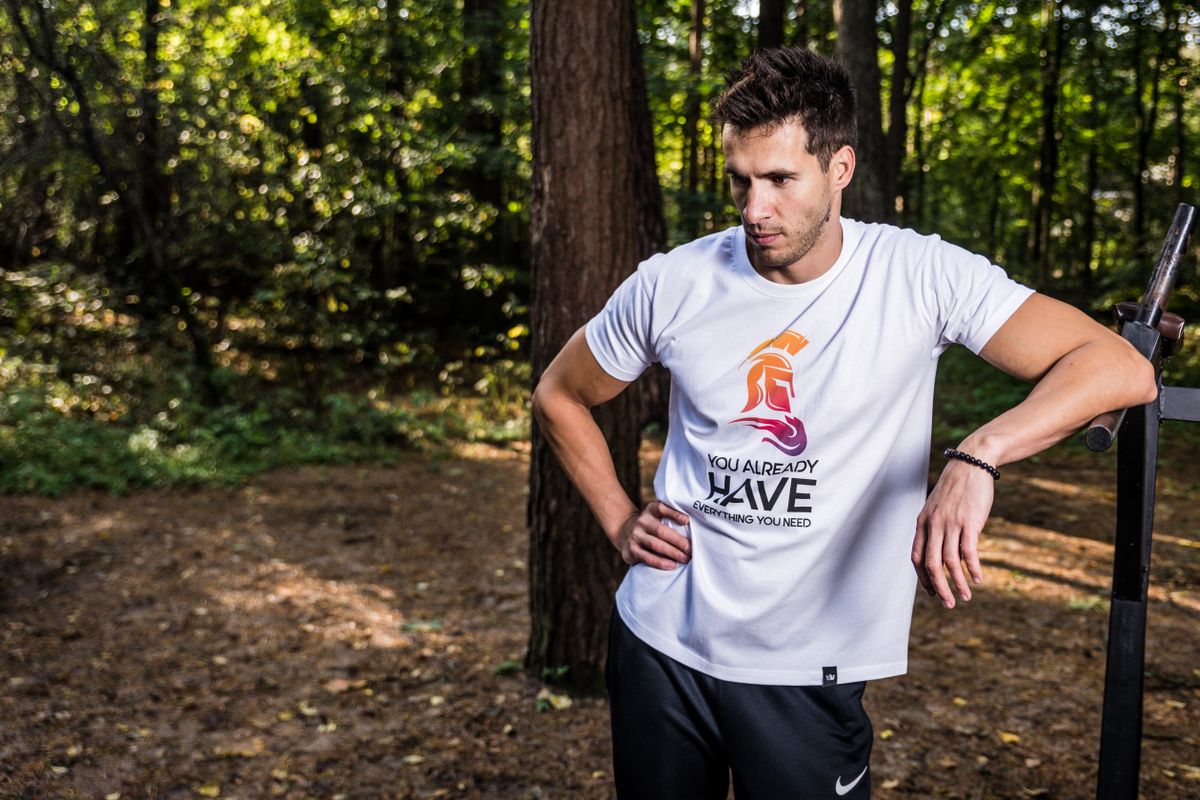
The crew is a round neckline at or just below the collarbone — the default because it frames the face symmetrically and works under everything.
The vee is a shallow V. The open line lengthens the neck visually and breaks up a square jaw or a rounder face.
The scoop is a wider, deeper U — more open than a crew, softer in drape, common in slubby or drapey jerseys that hang away from the body.
The boat neck runs wide and nearly horizontal, often from shoulder seam to shoulder seam across the collarbone. It widens the shoulder line, which balances narrower shoulders and longer necks; it can overwhelm a broad frame.
The henley is not a neckline but a short buttoned placket at the chest. The vertical band of contrast draws the eye and adds visual bulk to the chest.
The collar is rib, not jersey
The body of a tee is single jersey. The collar is a rib knit — columns of knit and purl stitches that stretch sideways and snap back. That sideways stretch is what lets the neck opening pass over your head at all.
Pure cotton rib stretches but recovers badly. After enough over-the-head cycles the loops stay elongated, the collar sits in waves, and the industry nickname for the result is the “bacon neck.” Premium collar rib is typically cotton blended with a small percentage of elastane — commonly 3–5% — plated with the cotton yarn so the rib recovers after each stretch. That blend is the difference between a collar that lies flat after a year and one that ripples after a month.
Heat and tension finish the job: hot water relaxes the knit, a hot dryer sets the deformation in, and hanging a wet shirt by the shoulders lets gravity pull the collar out of shape at its heaviest. Cold wash and flat or wide-shoulder drying keep the collar’s shape far longer.
Choosing a neckline for your frame
Think in terms of what needs balancing. A rounder face or a shorter neck gains from the open vertical of a vee; a long neck can take a higher crew without disappearing. Broad shoulders read wider under a boat neck and cleaner under a vee or scoop. A henley placket adds chest mass, which helps a flat torso and can crowd a heavier one.
None of this is a rule; it is proportion, the same logic behind how much ease a garment needs before it stops flattering the body underneath.
What to check before ordering
Three things separate a collar that lasts from one that ripples. First, the fiber content: cotton with a few percent elastane in the rib beats 100% cotton. Second, the construction — shoulder-to-shoulder taping, a strip of knit tape across the upper back, stops the seam from stretching into a peak above the collar. Third, the collar height; a tall rib rolls or folds, a low one lies flat.
The same discipline — reading the spec list instead of the lifestyle photo — separates a white tee worth rebuying from one that yellows at the collar in a season. When the body shrinks out of shape, the cause is the wash, not the cut, as why clothes shrink in the wash covers.
FAQ
- Why does my t-shirt collar go wavy after washing?
- The collar is rib knit, and pure cotton rib has poor elastic recovery — the yarns stretch over your head and stay stretched. Hot water, a hot dryer and hanging the wet shirt by the shoulders all speed it up. Collar rib blended with a small percentage of elastane recovers much better; check the fiber content line for spandex or Lycra.
- Which neckline suits a round face?
- Open shapes do the work: a vee or a scoop lengthens the visible line from chin to chest, while a high crew closes it off. This is proportion, not a rule — if the rest of the outfit is busy, the simplest crew is the quieter choice.
- Is a henley a neckline type?
- No. A henley is a placket — two to five buttons on a short strip at the chest — and it can be set into a round crew neckline or a vee. What changes the look is the placket's width and how many buttons are left open, not the neckline shape underneath.
Written by
Nora Finch
I started Dressing Time after one too many orders that came back in the wrong size. Everything here is built from published specifications, brand measurement charts and what owners actually report.
More in Everyday Wardrobe