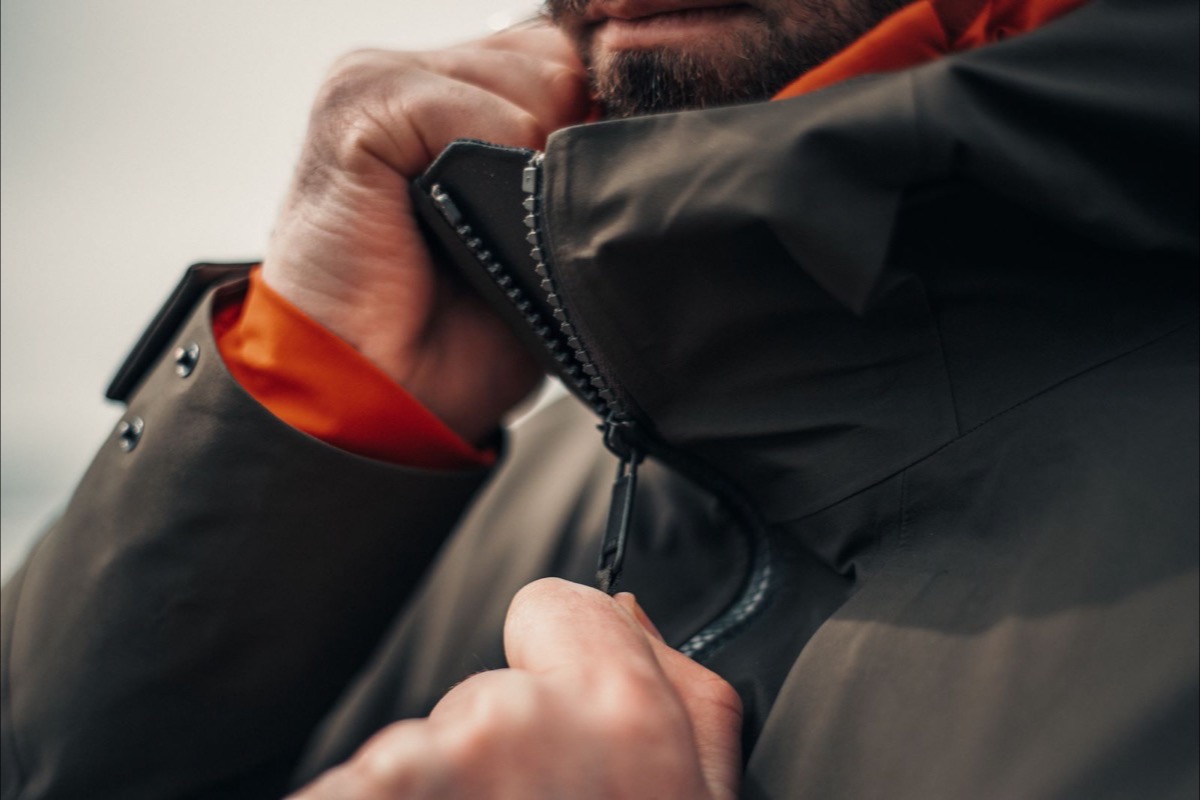
Windproof and Waterproof Are Not the Same Claim
One is measured in millimetres of water, the other in cubic feet of air. How to read both numbers, why seams decide a rain jacket, and what DWR really does.
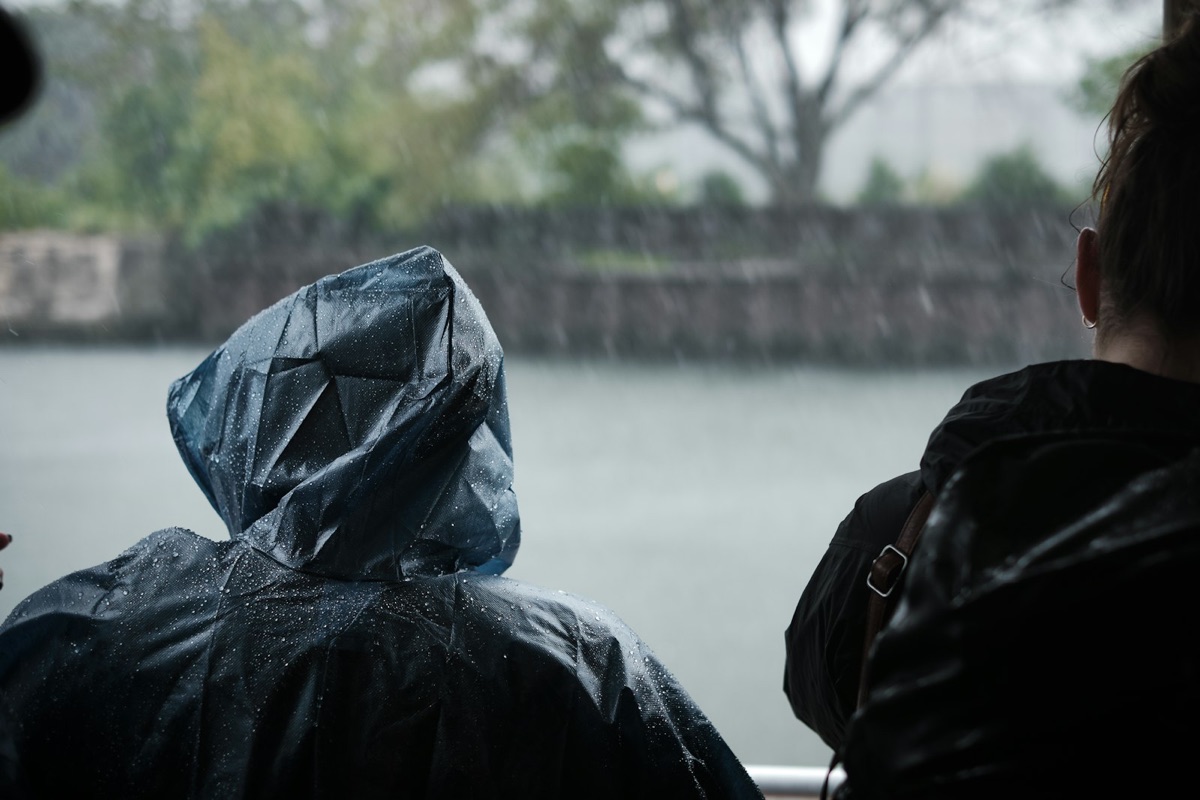
A softshell can block a 30 mph gust completely and soak through in the time it takes to walk four blocks. That is not a manufacturing defect. The jacket was built for one job and sold with language that implied a second.
The two properties come from different tests, and reading them separately is the difference between a jacket that works and a jacket you resent.
Two tests, two numbers
Waterproofness is measured with a hydrostatic head test: a column of water is placed over a fabric sample and the height at which it leaks is recorded in millimetres. Five thousand millimetres handles drizzle. Ten thousand handles steady rain. Twenty thousand is where all-day rain and the pressure of a pack strap stop being a problem.
Wind resistance is measured as air permeability, in cubic feet per minute through a square foot of fabric. Zero CFM means the fabric is effectively airtight. Anything from about 5 to 30 CFM is wind-resistant and still breathable. Above 30 and the fabric moves enough air that a gust will find its way through.
A number printed on a hangtag is usually one of these two. Almost never both.
What the waterproof number does not cover
A fabric can pass 20,000 mm and still leak, because water does not only go through the cloth. It goes through the stitch holes at every seam, the zipper tape, and the pocket opening. That is why the construction language matters more than the headline rating.
Fully seam-sealed means tape over every seam on the inside. Critically seam-sealed means the main body only, which is common on lighter jackets and worth knowing if you plan to sit on wet ground. A water-resistant zipper has a coated coil; a waterproof one has a sealed flap or a welded zip. Neither is the same as a flap with a gutter, which sheds most rain and fails in wind-driven weather.
The guide to layering under a rain shell covers what goes beneath; this is about what the shell itself promises.
DWR is a finish, not a barrier
Durable water repellent sits on the outer face of the fabric and makes droplets bead and roll. It buys time. When it wears off, the outer fabric wets out, the garment feels clammy, and the membrane stops breathing because it is covered in a film of water.
You can usually revive it. Wash the jacket with a technical detergent, tumble it low to reactivate the existing finish, and reapply a spray or wash-in product if water still soaks in. A jacket that beads again after a wash was never leaking; it was saturated on the outside.
None of this makes a non-waterproof jacket waterproof. DWR on a cotton anorak will shed a shower and give up in ten minutes of real rain.
Breathability is the third number
The reason a fully waterproof jacket can still be unpleasant is that the same membrane that keeps water out slows vapour from getting out. Breathability is measured in grams of vapour per square metre per day, and the honest figure for most recreational shells is in the 10,000 to 20,000 range.
Higher numbers help when you are working hard in the rain. They do nothing when you are standing still. A jacket with pit zips and a two-way front zip often manages moisture better than a higher-rated fabric without them, because a mechanical vent moves more air than a membrane diffuses.
What to check before you buy
Ask what the jacket is for. A commute of fifteen minutes in a city needs 10,000 mm, taped seams, and a hood that adjusts at the back. A day on a ridge needs 20,000 mm, a helmet-compatible hood, and pockets that sit above a hipbelt.
Then check the two claims separately on the spec sheet. If the listing says “windproof” and never mentions a hydrostatic head, it is telling you what the jacket is. If it prints a waterproof rating but no seam information, assume the seams are not taped and price it accordingly.
One more: denim weight taught a lot of people to read ounces properly. The same habit works here. A jacket spec sheet with real numbers is a different document from one with adjectives, and the difference usually shows up in the second winter, not the first.
FAQ
- What does a 10,000 mm waterproof rating mean?
- A fabric sample held under a column of water resists leaking until the column reaches 10,000 mm, roughly 33 feet. That is a light-to-steady rain garment. Sustained rain and pack straps press harder, so 20,000 mm is the more realistic figure for all-day wear.
- Is a windproof jacket automatically waterproof?
- No. Windproofness is about air passing through the fabric, measured in cubic feet per minute. A tightly woven softshell can score close to zero CFM and still wet out in twenty minutes of rain because the fibres themselves absorb water. The two properties come from different constructions.
- Does DWR make a jacket waterproof?
- It makes the outer face shed droplets so the fabric does not soak through and feel cold. It does not stop water from passing through the membrane at a seam or zipper. A jacket whose DWR has worn off is still waterproof in the technical sense, and still miserable to wear.
Written by
Nora Finch
I started Dressing Time after one too many orders that came back in the wrong size. Everything here is built from published specifications, brand measurement charts and what owners actually report.
More in Outerwear & Layers