Packable Rain Jackets: Packed Size, Waterproof Ratings, and the Venting Trade-Off
Packed size, hydrostatic head ratings, and pit zips: what separates a packable rain shell you actually carry from one that stays in the closet.
A packable rain jacket has two jobs that pull in opposite directions: disappear into a bag, and keep water out the moment it comes back out. Brands put a millimetre number on the second job. The first one is where buying decisions go wrong.
What “packable” actually means
Self-stuffing — the jacket folds into one of its own pockets, which turns inside out and zips closed. Nothing separate to lose. Packed, a 3-layer shell is roughly the size of a large grapefruit; a 2.5-layer one is closer to a fist.
Separate pouch — the jacket ships with a stuff sack. It packs marginally smaller and the pouch can be left behind to save weight, which is how pouches get lost.
Weight tracks construction: 2.5- and 2.75-layer shells land around 160–300 g, full 3-layer shells near 400 g. Fit matters more than on a normal jacket, because a shell has to go over what is underneath without compressing it — how to read a size chart covers the layering allowance.
Hydrostatic head: the number is narrower than it looks
Under ISO 811, water pressure is raised against a clamped fabric sample until water penetrates, and the result is reported in millimetres of water column. It answers one question: how much pressure before the fabric lets water through.
That matters because rain is not the only pressure a jacket meets. Kneeling on wet ground, a bag strap pressing a wet shoulder, or sitting on a wet bench force water through fabric that shrugs off a shower.
What the number does not cover:
- Breathability, measured separately in g/m²/24h. A 20,000 mm shell can still breathe badly.
- Seams and zips. Water reaches needle holes and zip teeth first. Lower-rated fabric with fully taped seams beats higher-rated fabric without.
- The DWR finish, tested by spray rating rather than water column.
- Comparison between brands. ISO 811, AATCC 127 and JIS L 1092 are not the same test.
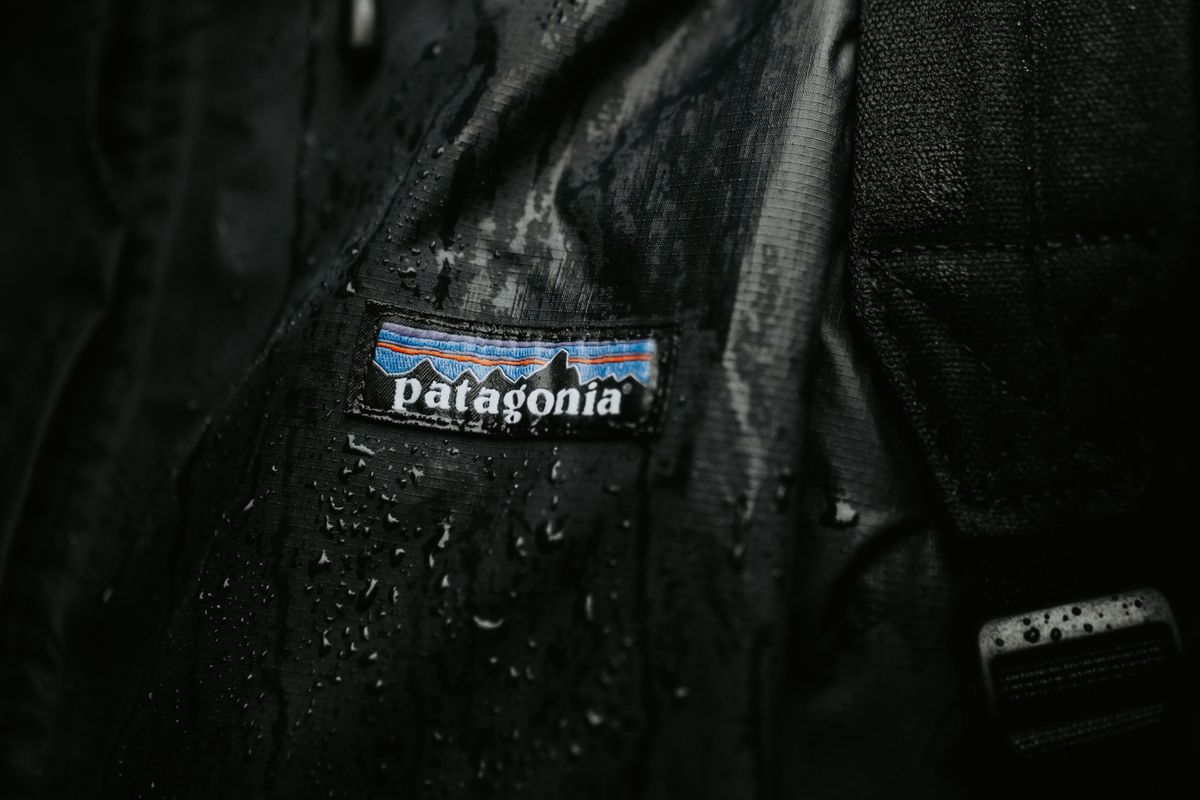
Several brands publish no figure at all. Patagonia publishes its H2No Performance Standard for the Torrentshell and no hydrostatic head number; the 20,000 mm figure circulating for it comes from retailers. A missing number is a missing number, not a weak jacket.
Every vent is a hole you then have to seal
Pit zips are the most useful feature on a waterproof shell and the first one cut to save weight. Each adds a zip, a storm flap, seam tape and grams — which is why the lightest packable shells vent only through the front zip.
That is a genuine trade, not a budget line. A shell worn while moving hard in mild rain wants pit zips; one carried as insurance can do without. Output decides it — how to layer under a rain shell explains why membranes rarely keep pace with exertion. What sits underneath sets the ceiling: merino versus cotton as a base layer settles that part.
What to check before buying
| Check | What to look for | What it does not tell you |
|---|---|---|
| Hydrostatic head | 10,000 mm or more for sustained rain and pack straps | Breathability, seams, or DWR |
| Packed form | Self-stuffs into its own pocket | How small — few brands publish packed volume |
| Venting | Pit zips, ideally a two-way front zip | Whether the membrane breathes |
| Weight | About 160–300 g for 2.5-layer, near 400 g for 3-layer | Abrasion resistance, which falls with denier |
| Seams | “Fully taped” or “100% seam taped” | Which seams were skipped |
Three packable shells
Patagonia Torrentshell 3L Rain Jacket is the durable end: 400 g (14.1 oz) as published by Patagonia, a 3-layer H2No shell with welted pit zips, and it self-stuffs into the left handwarmer pocket on a carabiner loop. The fabric is stiff and crinkly, and there is no chest pocket.
Outdoor Research Helium UL Jacket is the lightest of the three at 162 g (5.7 oz) per the brand’s specification, built from 2.75-layer Toray Dermizax with a 15-denier face. It stuffs into its single chest pocket, has no pit zips, and the thin shell needs care against abrasion.
Marmot PreCip Eco Rain Jacket sits between them: it packs into its own pocket, keeps its PitZips, and Marmot lists the NanoPro fabric at 10,000 mm waterproof and 17,000 g/m²/24h breathability.
The one thing to do before ordering
Measure the space the jacket has to fit into, then check whether it self-stuffs. A shell that packs slightly larger and cannot be separated from itself beats one that depends on a pouch you will lose.
The picks
Patagonia Torrentshell 3L Rain Jacket
Best for all-day rainThe heaviest of the three at 400 g as published by Patagonia, and the only one with a full 3-layer build. It self-stuffs into the left handwarmer pocket on a carabiner loop, has welted pit zips, and uses a 50-denier recycled nylon face. The fabric is stiff and crinkles audibly, the fit runs regular rather than trim, and there is no chest pocket for a phone.
What works
- — 3-layer construction holds up under pack straps and sustained rain
- — Pit zips plus internal and external storm flaps on the main zip
- — Self-stuffs into a pocket it cannot be separated from
What doesn't
- — At 400 g it is roughly double the weight of an ultralight shell
- — No chest pocket; handwarmer pockets have fabric flaps only
- — Patagonia publishes no hydrostatic head figure, so the fabric cannot be compared numerically
Outdoor Research Helium UL Jacket
Best for packing smallA 162 g shell built from 2.75-layer Toray Dermizax with a 15-denier face fabric, which is how it gets so small. It stuffs into its single chest pocket and carries an adjustable wire-brim hood. There are no pit zips, no handwarmer pockets on the men's version, and the thin face fabric is the durability compromise you are making for the weight.
What works
- — Lightest and smallest-packing fully waterproof shell in this group
- — Wire-brim hood holds its shape in wind
- — Chest pocket doubles as the stuff sack, with a carabiner loop
What doesn't
- — No pit zips or core vents, so moisture builds during sustained effort
- — 15-denier fabric is thin and needs care against abrasion
- — Highest price per gram here, and no hand pockets on the men's version
Marmot PreCip Eco Rain Jacket
Best valueThe middle option: it packs into its own pocket, keeps its PitZips, and Marmot lists the NanoPro Eco fabric at 10,000 mm waterproof and 17,000 g/m²/24h breathability. The hood rolls into the collar and the hem and cuffs adjust. Breathability is the usual complaint at this price, and the hand pockets are lighter-duty than the rest of the build.
What works
- — PitZips at a price point where they are often cut
- — Packs into its own pocket with no separate pouch to lose
- — Published 10,000 mm waterproof and 17,000 g/m²/24h figures make it comparable on paper
What doesn't
- — 2.5-layer construction wets out sooner in prolonged rain than a 3-layer shell
- — Breathability trails more expensive shells once output rises
- — Pockets and trim are the first things to show wear
Comparison
| Specification | Patagonia Torrentshell 3L Rain Jacket | Outdoor Research Helium UL Jacket | Marmot PreCip Eco Rain Jacket |
|---|---|---|---|
| Claimed weight | 400 g (14.1 oz) | 162 g (5.7 oz) | About 290 g |
| Construction | 3-layer H2No, 50-denier recycled nylon ripstop | 2.75-layer Toray Dermizax, 15-denier nylon ripstop | 2.5-layer NanoPro Eco, recycled nylon ripstop |
| Packed form | Self-stuffs into left handwarmer pocket, carabiner loop | Self-stuffs into chest pocket | Stuffs into its own pocket |
| Venting | Welted pit zips, two-way-adjustable hood | None | PitZips |
| Waterproof rating | Not published by Patagonia | 20,000 mm cited in third-party reviews, not confirmed on the brand page | 10,000 mm (Marmot regional listing) |
| Pockets | Two welt handwarmer pockets, no chest pocket | One zippered chest pocket | Zippered hand pockets |
FAQ
- How waterproof does a packable rain jacket need to be?
- Around 10,000 mm hydrostatic head covers sustained rain and the pressure from a bag strap. Below 5,000 mm is shower territory. The number describes the fabric only — taped seams and a working zip matter as much, and a jacket with no published rating is not automatically worse than one with a high one.
- Is a lighter rain jacket always better for travel?
- No. Dropping below roughly 200 g means a thinner face fabric and, usually, no pit zips. That is the right trade for a jacket carried as insurance; the wrong one for a jacket worn all day in the rain while walking.
- Do pit zips make a rain jacket leak?
- They add a seam and a zip, both needing sealing, and poorly built ones do leak. On a well-made shell the storm flap behind the zip handles it, and the ventilation gained is worth more than the small increase in leak risk.
Sources
- Patagonia — Men's Torrentshell 3L Rain Jacket (weight, construction, self-stuffing, pit zips)
- Switchback Travel — Patagonia Torrentshell 3L review (third-party assessment)
- OutdoorGearLab — Outdoor Research Helium UL review (list price, measured weight)
- SectionHiker — backpacking rain jacket comparison (Helium UL weight and construction)
- Marmot — Men's PreCip Eco Rain Jacket (US price, features)
- Marmot Australia — PreCip Eco specification (10K waterproof / 17K breathability)
- Walks4all — hydrostatic head explained, citing ISO 811 and SATRA on EN 343
- OD's Designer Clothing — water column rating glossary (test methods are not interchangeable)
Written by
Maya Ellis
I started Dressing Time after one too many orders that came back in the wrong size. Everything here is built from published specifications, brand measurement charts and what owners actually report.
More in Outerwear & Layers