Carry-On Size Limits by Airline: The Numbers Every US Carrier Publishes
American, Delta, United, JetBlue and Alaska all publish 22 x 14 x 9 inches. Southwest publishes more. Here is the full table, and why your bag's own spec sheet may disagree with it.
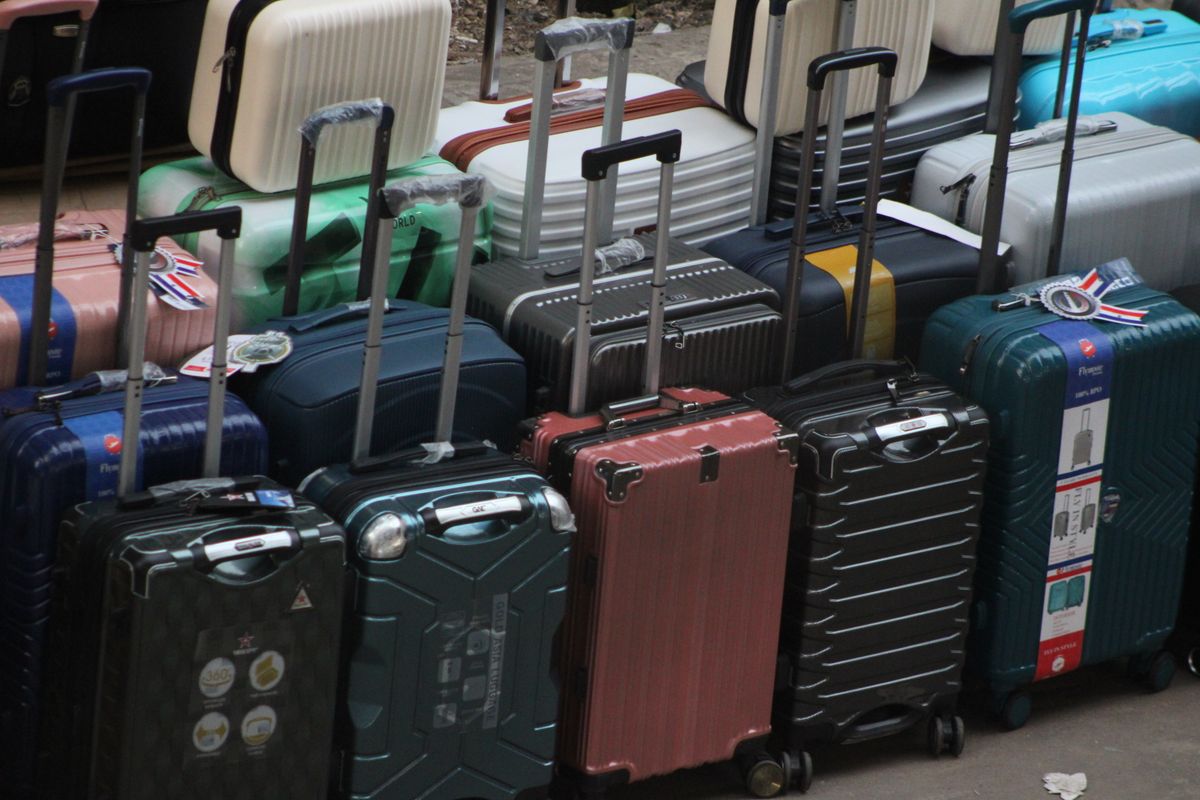
The number most US airlines publish for a carry-on is the same number: 22 × 14 × 9 inches. American, Delta, United, Alaska, JetBlue and Hawaiian all state it on their own baggage pages, and all of them specify that it includes wheels and handles. Southwest publishes a larger allowance, and the ultra-low-cost carriers publish their own figures alongside a fee.
That is the part everyone agrees on. The part that trips people up comes later, when the bag they bought — sold as “carry-on compliant” — turns out to be an inch over in one dimension.
What each airline publishes
| Airline | Carry-on limit (in) | Personal item (in) | Weight limit |
|---|---|---|---|
| American Airlines | 22 × 14 × 9 | 18 × 14 × 8 | None enforced on most fares |
| Delta Air Lines | 22 × 14 × 9 | Not published as dimensions | None enforced on most fares |
| United Airlines | 22 × 14 × 9 | 9 × 10 × 17 | None enforced on most fares |
| Alaska Airlines | 22 × 14 × 9 | Not published as dimensions | None enforced |
| JetBlue | 22 × 14 × 9 | 17 × 13 × 8 | None enforced |
| Southwest | 24 × 16 × 10 | Under-seat only | None enforced |
| Spirit | 22 × 18 × 10 | Small personal item | 40 lb |
| Frontier | 24 × 16 × 10 | Small personal item | 35 lb |
Figures are those published by each airline on its own baggage information pages. Check your fare before you rely on any of them: basic economy on American, Delta and United restricts the overhead carry-on, and on some routes a bag that meets the dimensions still gets gate-checked because the bins filled.
Why your bag’s spec sheet disagrees with the airline
Two reasons, both common.
The brand measures the shell; the airline measures the bag. Manufacturers frequently publish the body dimensions and list wheels, handles and external pockets separately, or omit them. Airlines measure the whole thing at its widest points. A “22-inch” bag with a 2-inch wheel housing and a flush handle is often 23 or 24 inches as the airline measures it.
Sources disagree with each other. Published dimensions for the same suitcase vary between the brand page, retailer listings and third-party reviewers — sometimes by more than an inch in a single dimension. When you see two different figures for the same bag, the larger one is usually the one that includes everything protruding, and that is the one that matters at the gate.
The practical rule: measure your own bag. Extend the handle, stand it on its wheels, and take the number at the outermost points. If that number is over the airline’s figure, the bag is over — regardless of what the product page says.
The regional jet problem
A bag that fits a mainline overhead bin can fail on a regional jet. Embraer 175 and CRJ-series aircraft have smaller bins, and roll-aboards that pass the sizer are routinely gate-checked on those aircraft anyway. Soft-shell bags have an advantage here: they compress. A hard-shell case either fits or it doesn’t.
What actually gets enforced
US carriers rarely measure bags at the gate. The airlines that do enforce dimensions and weight consistently are the European budget carriers — Ryanair and Wizz Air keep sizers at many gates and charge at the gate — and Spirit and Frontier, for whom carry-on fees are revenue. Several Asian carriers enforce weight rather than size.
None of this means the limit doesn’t apply. It means the risk is asymmetric: a bag a little over the line usually sails through on a US domestic flight, and usually doesn’t on a budget carrier in Europe.
Measuring before you buy
If you’re choosing a bag rather than checking one you own, the useful number isn’t the capacity in litres. It’s the external footprint with wheels and handles included, compared against 22 × 14 × 9. Capacity figures are useful for deciding between two bags that already fit; they say nothing about whether either one does.
Three cases, three footprints
It helps to have reference points, so here are three that sit at different places on the range.
Away The Carry-On publishes 21.7 × 13.7 × 9.0 inches — inside the standard limit on paper, with a textured shell that hides scuffs better than glossier finishes. The recurring complaint in long-term owner reports is handle wobble after heavy use.
Monos Carry-On Pro publishes 22.0 × 14.0 × 9.0, which is exactly the limit rather than under it. Its Hinomoto wheels are the part reviewers single out, and the front laptop compartment means security without unpacking — though that compartment is space taken out of the main cavity.
Travelpro Maxlite 5 21” publishes 21.75 × 15.75 × 7.75 — the widest of the three and by far the lightest at roughly 5.4 lb. Fabric compresses, which matters on regional jets, but there’s no rigid protection for anything fragile.
Published dimensions for all three vary between sources by up to an inch in a single dimension. That variance is itself the argument for measuring the bag you actually receive rather than trusting any listing.
The picks
Away The Carry-On
Best overallThe baseline hard-shell case most competitors are measured against. Published footprint sits inside the 22 × 14 × 9 limit on paper, and Away's textured polycarbonate hides scuffs better than glossier finishes. Owner reports over several years consistently raise one complaint: the telescoping handle develops wobble after heavy use.
What works
- — Published dimensions sit under the standard US limit
- — Textured shell hides cosmetic wear well
- — Lifetime warranty with a retail network that makes claims straightforward
What doesn't
- — Handle wobble is a recurring long-term complaint in owner reports
- — Heavier than soft-shell equivalents at similar capacity
- — No expansion, so capacity is fixed
Monos Carry-On Pro
Best for accessUses Hinomoto spinner wheels, which luggage reviewers and frequent travellers routinely rate as the quietest and best-tracking wheels available on a production case. The front compartment takes a laptop out at security without opening the main cavity — which costs internal volume, so the usable packing space is smaller than the shell suggests.
What works
- — Hinomoto wheels are consistently praised for quiet, straight tracking
- — Front laptop compartment clears security without unpacking
- — Includes laundry bag and shoe bags
What doesn't
- — Front pocket is subtracted from the main packing cavity
- — Glossier finish shows scuffs more readily than textured shells
- — Sits right at the 22-inch limit rather than under it
Travelpro Maxlite 5 21"
Best valueA soft-side case at roughly half the weight of the hard shells here. Fabric compresses, which matters on regional jets with shallow bins, and the expandable zip adds capacity when the overhead bin is forgiving. The trade-off is structure: soft sides offer no crush protection for anything fragile.
What works
- — Around 5.4 lb published weight — noticeably lighter than hard-shell rivals
- — Fabric compresses into shallow regional-jet bins
- — Expands when you need the extra capacity
What doesn't
- — Widest of the three, at 15.75 in published width
- — No rigid protection for fragile contents
- — Fabric shows wear faster than polycarbonate
Comparison
| Specification | Away The Carry-On | Monos Carry-On Pro | Travelpro Maxlite 5 21" |
|---|---|---|---|
| External dimensions (in) | 21.7 × 13.7 × 9.0 | 22.0 × 14.0 × 9.0 | 21.75 × 15.75 × 7.75 |
| Published capacity | 39.8 L | 36 L | 39 L (expands) |
| Published weight | 7.5 lb | 7.8 lb | 5.4 lb |
| Shell | Makrolon polycarbonate | Aerospace polycarbonate | Polyester with DuraGuard |
| Wheel type | 360° dual spinner | Hinomoto silent spinner | 4-wheel 360° spinner |
| Meets 22 × 14 × 9 on paper | Yes | Yes, at the limit | Yes, but widest of the three |
Sources
Written by
Maya Ellis
I started Dressing Time after one too many orders that came back in the wrong size. Everything here is built from published specifications, brand measurement charts and what owners actually report.
More in Bags & Luggage