Carry-On Handle Height and Wheel Size: The Two Numbers Missing From the Listing
Wheels count toward the airline limit, and a handle that ends below your hip makes a loaded case feel heavier. What to measure before buying a carry-on.
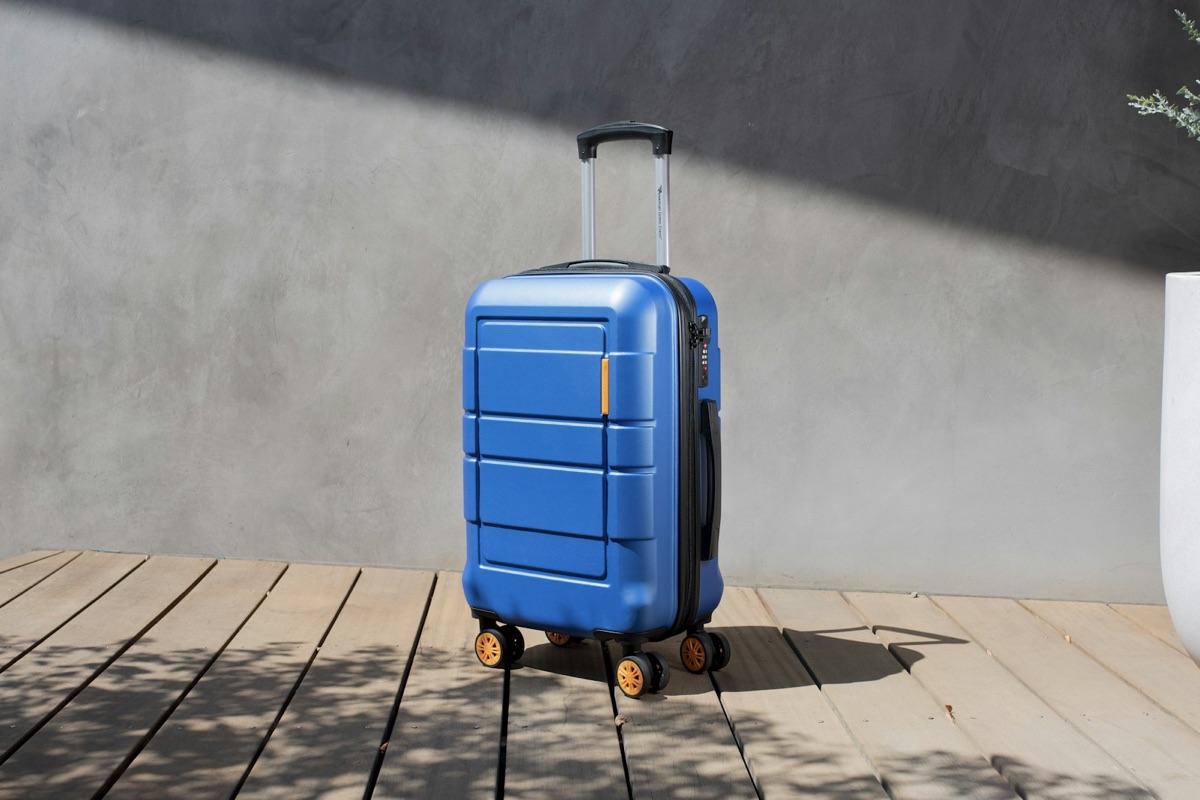
A carry-on sold as 22 inches is not 22 inches of packing space. Some of that number is wheel, some is handle housing, and the airline measuring your bag at the gate will count all of it.
The dimension that gets checked is the one on the airline’s page. The dimensions that decide whether the case is pleasant to drag through a terminal are not published at all.
What the size class hides
Most US carriers publish a limit around 22 by 14 by 9 inches, and the IATA cabin guideline is 55 by 40 by 20 centimetres. Both generally include wheels and handles as the case stands.
Manufacturers know this, so a “22-inch carry-on” is usually built to fit inside that envelope with the wheels attached. The interior is smaller. On a four-wheel case, the wheel housings and the handle tubes eat into the corners, and the usable volume is commonly two to four litres less than the exterior dimensions suggest.
That is not a scandal, but it is the reason two cases that both pass the sizer can hold noticeably different amounts. The airline-by-airline limits are the first check; this is the second.
The handle height nobody lists
Telescoping handles usually have two or three stops. The fully extended height, measured from the floor to the grip with the case upright, typically falls between 36 and 42 inches.
For a comfortable walk, the grip should land near your hip with your arm slightly bent. If the handle ends below your hip, you lean forward and pull the case behind you at an angle, which puts the weight on your shoulder rather than under your hand. If it ends above your natural grip, you walk with your arm raised.
Height matters more with a heavy case. An empty case forgives a short handle; a case packed to 20 pounds does not.
Test the handle at full extension with the case loaded, not empty. Push down on the grip and rock the case side to side. A small amount of play is normal and comes from the tube tolerance. A handle that flexes more than an inch at the grip will feel loose within a year, and the tubes are usually not replaceable.
Wheel diameter beats wheel count
Spinner wheels are commonly 50 millimetres across, about two inches. Larger wheels, 60 to 70 millimetres, roll over pavement joints and tram tracks better but raise the case and take space from the shell.
Four small wheels are ideal on terminal floors and poor on anything else. They also add weight: a four-wheel case is often half a pound to a pound heavier than a two-wheel case of the same shell size, and the hardware is not always replaceable.
Two larger wheels track better over rough ground and survive curbs. The trade is that the case cannot stand upright on its own, and you carry more of the weight on two wheels rather than rolling it beside you.
If you fly mostly to cities, four wheels. If you drag a case over cobblestones, gravel, or snow, two larger wheels will outlast them. Hard-shell versus soft-shell changes the same calculation, because a soft case flexes over a curb where a hard one has to be lifted.
The parts that fail first
Wheels and handles fail before shells do. Look at how they are attached.
Screws mean the wheel housing can be replaced with a screwdriver and a part from the manufacturer. Rivets mean it cannot, at least not without drilling. Zippers fail next on soft cases; a sealed or coated zip lasts longer than a standard coil but is harder to repair.
The handle assembly is the harder problem. On most cases the tubes run inside the shell and are not serviceable at all. That makes the wobble test worth doing in the store, because it is the one failure you cannot fix later.
Measure before you pack
Stand the case upright and measure the full height including wheels and the collapsed handle. Compare that to your airline’s number, not to the size class on the listing.
Then extend the handle fully, put a hand on the grip, and check where it lands against your hip. If it sits below the hip bone, the case will pull you into a lean for the whole walk to the gate.
Neither measurement takes a minute, and both are cheaper than discovering the problem at the check-in desk with a queue behind you. Packing for five days in a carry-on assumes the case passes both checks; the packing list cannot fix a bag that does not.
FAQ
- Do carry-on dimensions include wheels and handles?
- For most US carriers and for the IATA cabin guideline, yes. A case sold as 22 inches is usually 22 inches including wheels and the collapsed handle. If an airline gives a limit, measure the whole case standing upright rather than trusting the product's size class.
- How high should a carry-on handle extend?
- High enough that your hand rests near hip height with your arm slightly bent. For most adults that means 38 to 42 inches from the floor to the grip when the case is upright. A handle that ends below your hip makes you lean and puts the load behind you instead of under you.
- Are four wheels better than two?
- They are better in an airport and worse on a curb. Four spinner wheels let the case stand upright and roll beside you, but they add weight and hardware and roll badly on gravel. Two larger wheels track straighter over rough ground and take more abuse.
Written by
Nora Finch
I started Dressing Time after one too many orders that came back in the wrong size. Everything here is built from published specifications, brand measurement charts and what owners actually report.
More in Bags & Luggage