Where Hardside Luggage Wins and Where It Costs You
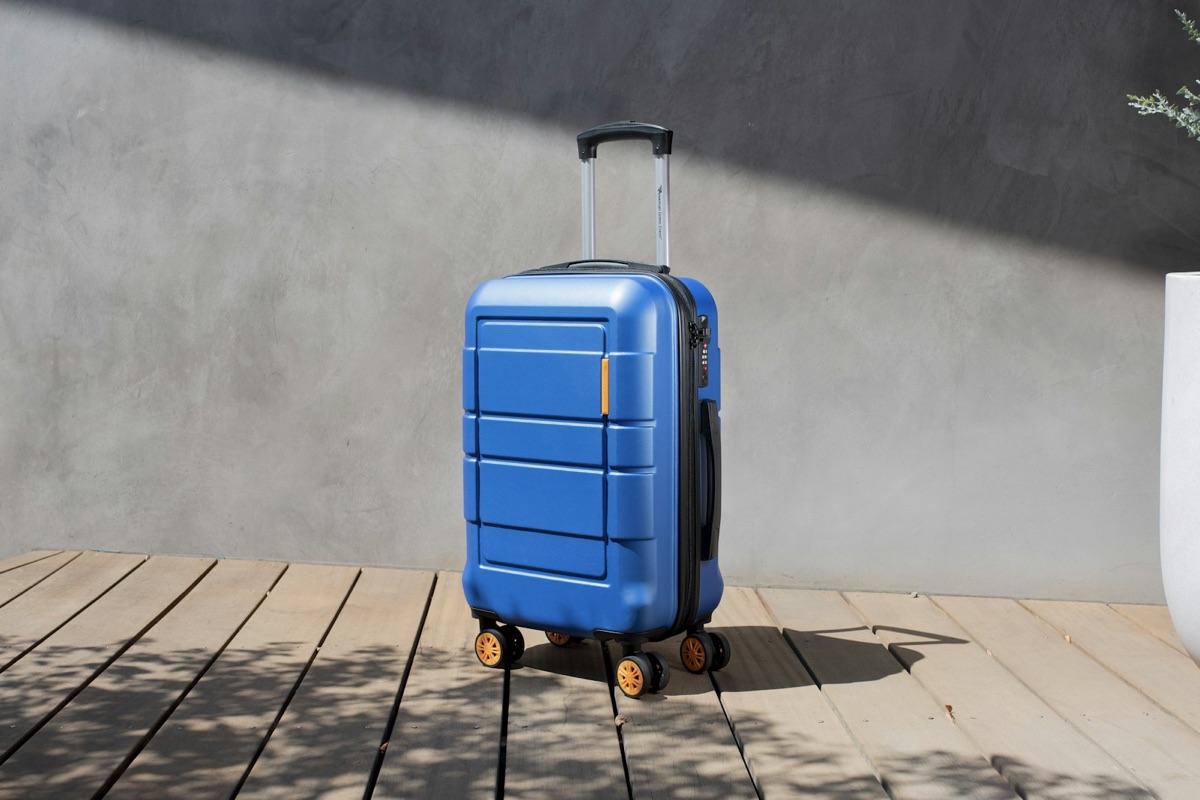
Hardside and softside cases both survive normal trips. They fail differently — one terminal, one repairable — and that difference should decide the purchase.
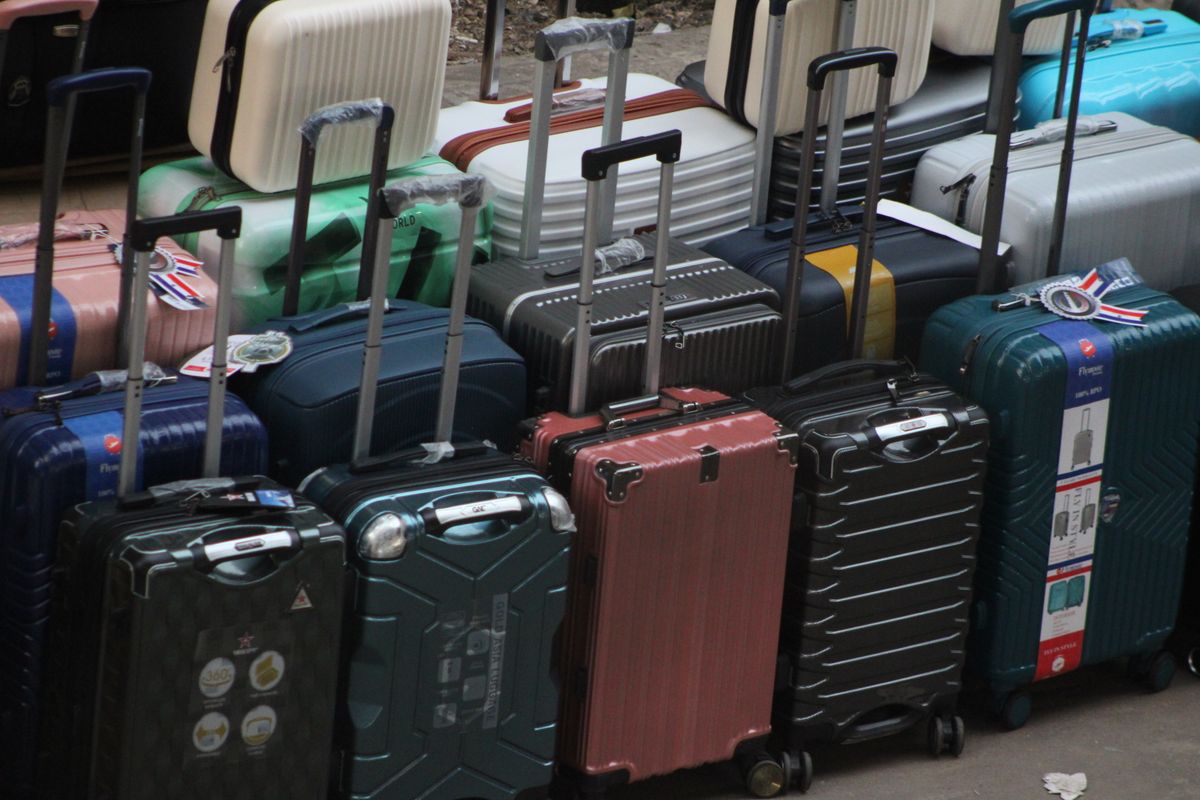
Both constructions survive a normal trip. The useful difference is how each one fails: a hard case tends to fail suddenly and permanently, a soft case gradually and repairably.
Crush protection belongs to the rigid shell
A hard shell spreads stacking load across its surface instead of passing it onto whatever is packed inside. Check a soft case containing anything rigid and the fabric presses that object directly.
Material matters more than the category. Polycarbonate flexes under load and returns; pushed past that point it does not stretch, it cracks. Cheaper hard cases typically use ABS, which is more brittle and gives up sooner, usually at a corner or an edge rather than a flat panel.
Geometry does part of the work on either side. A rigid shell’s ribs and curved corners turn a concentrated load into a spread one, and a soft case’s padding does the same job less completely. That is why the same drop can leave a hard case scuffed and a soft case dented where the frame behind it bent.
Compressibility is the carry-on argument
Fabric has room to give; a rigid box either fits the bin or does not. On a mainline aircraft that rarely decides anything. On a regional jet with shallow bins, it regularly does, which is why carry-on size limits by airline spends time on aircraft rather than on airlines.
Expansion zips work the other way too. A soft case that took more on the return leg can be zipped wider; a clamshell has a fixed volume, and forcing it stresses the frame zip instead.
The bin test is unforgiving in both directions. A soft case pushed past its shape can be pressed down to gauge height. A hard case even slightly proud of the sizer reads as too big, and gate agents judge against the metal frame, not against what would fit with a shove.
How each shell shapes what goes inside
A clamshell opens into two flat halves, so it rewards uniform packing: rectangles lie flat, cubes stack, and a load that starts level stays level until the zip closes. A soft case is one cavity with a lid, and it accepts odd shapes — boots, a tripod, a coat stuffed into the last corner — forgiving overpacking at the margins because the fabric stretches.
External pockets belong to softside almost exclusively, and they decide what lives at the gate. A laptop sleeve, documents, a layer that comes off indoors: a soft case keeps those reachable without opening the main compartment. A hard case keeps its pockets internal, which leaves contents invisible and dry in rain but forces everything through the main opening.
Neither approach packs better. They pack differently, and the habit that transfers across both is cubing, covered in whether packing cubes are worth it.
Empty weight counts against the limit
Empty weight is paid before anything goes in, and it is the one number that is comparable across listings. Kit Authority puts the softside advantage at 1–3 lb against an equivalent hardside; Luggage City quotes 0.5–1.5 kg. The figures disagree in size but agree in direction, which is generally worth more than a single precise number from one source. Wheels and handles count against both, but a rigid shell also carries frame material a soft case never needs.
Repairability decides what ownership actually costs
This is the dimension most buyers never price. A failed zipper on a soft case can be replaced at most repair shops; Kit Authority cites a range of US$30–60. A structural crack in a hard shell is generally not repairable, so the case is finished.
Handles belong in the same conversation. A telescoping tube that wobbles usually has a bent slide or a dry one, and a shop fixes it for less than a case costs; a snapped handle mount bonded to a hard shell can mean the shell itself, which returns the problem to the terminal-failure column.
Wheels are the exception that cuts both ways — they are the most-cited wear item on hard cases and are often replaceable, sometimes by the owner. Everything above the wheel housing behaves according to the shell.
Locks are a checkbox, not protection
Every checked bag in the United States is subject to search by TSA screeners, which is why nearly all cases sold there include a Travel Sentry–approved lock that screeners can open. The lock stops little else. Both shell types close with coil zips, and a coil zip can be forced apart with a ballpoint pen and re-zipped to hide the entry. A hard shell resists slashing, which fabric does not, but an opener who skips the slash goes through the zip on either construction. Treat the lock as what it is: a requirement for checking a bag, not security.
Two failure modes worth naming
Hardside: corner impacts. Point loads concentrate at corners and along edges. A cracked corner is structural and terminal; surface scuffing is cosmetic and can be ignored, or minimised by choosing a textured rather than a glossy finish.
Softside: closures and abrasion. Fabric tears are repairable and therefore survivable. Abrasion shows first where the case is dragged — the base fabric behind the wheels, the panel laid across rough concrete. The zip predates the fabric in most failures, and where quality is poor it is the first thing to go; both shell types use coil zips of comparable construction, so it is a shared weakness rather than a softside-only one.
Choosing by where the bag spends its life
Checked regularly, with anything breakable inside: hardside, and polycarbonate rather than ABS. Carry-on only, especially on routes flown by regional aircraft: softside, for compressibility and weight. Softside also ages better as a gate case, because fabric shrugs off being crammed into shared bins by other passengers, where a rigid shell takes every scrape as a permanent mark. Comparing two published dimension sheets is the same discipline as comparing garment measurements rather than labels — the method is laid out in how to read a size chart.
The ownership pattern most frequent travellers arrive at is one of each: a soft carry-on and a hard checked case.
FAQ
- Is hardside or softside better for checked bags?
- Hardside, in polycarbonate rather than ABS. A rigid shell spreads stacking load across its surface instead of passing it onto what is packed inside, and it sheds tarmac wet better than fabric. The trade-off is that a structural crack in a hard shell is usually not repairable, so a checked hard case is a replace-rather-than-fix proposition.
- Are polycarbonate shells more crack-resistant than ABS?
- Generally yes. Polycarbonate flexes under load and returns; ABS is cheaper and more brittle, and fails sooner under impact. The weak point on either is the same: corners and edges, where a concentrated load goes, rather than the flat panels.
- How much weight does a soft-sided case actually save?
- Published figures vary by source and size. Kit Authority puts the difference at 1–3 lb against an equivalent hardside, and Luggage City quotes 0.5–1.5 kg. Either way the soft case wins on empty weight, which matters most on airlines that weigh carry-ons.
Written by
Nora Finch
I started Dressing Time after one too many orders that came back in the wrong size. Everything here is built from published specifications, brand measurement charts and what owners actually report.
More in Bags & Luggage