The Weekender Under 40 Litres That Clears the Overhead Bin
Three weekender bags under 40 litres compared on capacity, weight, and whether the laptop and shoe compartments actually earn their place.
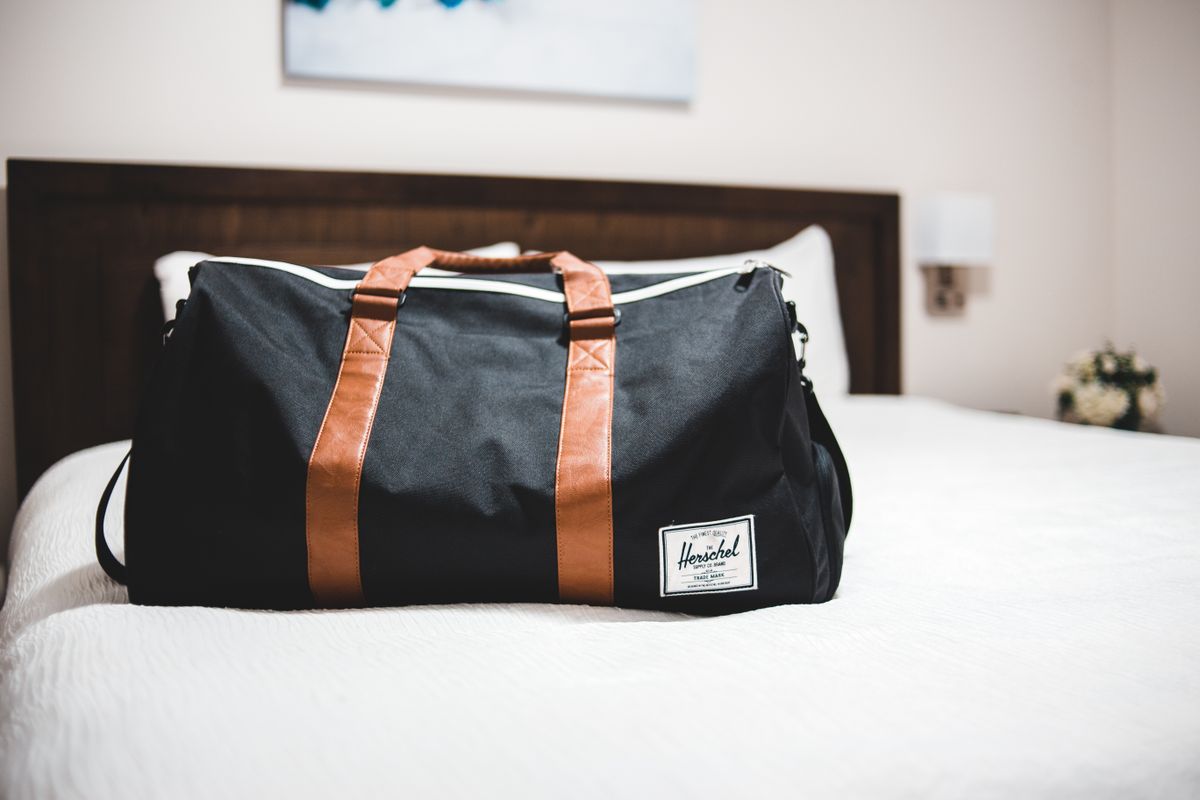
Under 40 litres is the sweet spot for two to four days without checking a bag. The number that decides whether the trip works is not the litres. It is whether the bag fits the bin once packed. It is whether the bag stands up on its own when set down in a hotel room. And it is whether the laptop and the shoes can stay out of each other’s way.
Capacity is not packing discipline
A 38L bag bulges past its shape the moment it is overstuffed, and a bulging soft bag is harder to lift and more likely to be gate-checked. Structure and a wide opening matter more than the headline capacity, because they let the bag be packed in layers instead of a heap. A clamshell or wraparound zip that lays the bag flat beats a top opening that has to be fished into.
The bulge is not only cosmetic. An overstuffed bag no longer matches its published dimensions, and the sizer at the gate measures what arrives, not what the label said. A bag packed to 85 percent of its capacity keeps its shape, its handles and its claim to the cabin. The same bag at 105 percent becomes a gate agent’s decision, and gate agents decide against bulges.
A wide opening does the same work as structure from the other side. Packing into a deep, narrow mouth means the contents stack blind; the bottom layer is whatever went in first. A bag that opens wide shows all of its floor at once, which turns packing from tetris into a plan.
Capacity discipline has a floor as well as a ceiling. A 30L bag packed for two days carries its load with room to spare, and the spare room is not wasted — it is the space that absorbs the souvenirs, the extra sweater, the wet item that cannot go back in the main compartment. A bag sized exactly to the trip has nowhere to put the trip’s surprises. The litre number buys margin, and margin is what makes a bag usable in both directions.
What the overhead bin actually requires
Bins are sized in dimensions, not litres. No airline publishes a litre limit, because litres say nothing about the shape the litres take. A rigid box and a soft duffel of identical capacity behave differently in the same bin, and the soft one wins whenever the bin is a sliver short.
That is the structural advantage of a fabric weekender: it compresses. A bag with a millimetre of side give can be pressed into a full bin by hand, while a hard-sided case of the same litres waits for the next bin or goes to the hold. The trade is protection — soft sides absorb a knock by denting, which is fine for clothes and final for a laptop unless the sleeve is padded. The dimension limits themselves, by airline, are the other half of this check.
The sizer check happens twice in practice: once at home with the bag packed the way it will actually fly, and once at the gate where it counts. Skipping the first check delegates the decision to the second.
Empty weight spends the allowance
Every airline that weighs cabin bags weighs the bag with everything in it. Empty weight is therefore a fixed tax paid before the first shirt goes in. A 2.35 kg bag and a 1.25 kg bag differ by 1.1 kg of clothing allowance on the same ticket, which on a budget carrier is the difference between one pair of shoes and two.
The weight comes from somewhere legible. Leather trim, a padded frame, a base compartment with its own zip and wall — each adds grams in exchange for function or finish. A structured shell that stands on its own needs the frame that makes standing possible. The honest comparison is not which bag is lightest but which bag’s weight buys features that get used; a gram spent on a shoe compartment that never holds shoes is a gram taken from socks.
Weighing the loaded bag before departure closes the loop. The scale at home is the same scale the airline uses, and a bag that comes in light has slack for the return trip — the direction most bags get heavier. A bag that starts at the limit outbound lands in the awkward zone where the journey home involves wearing the bulkiest items onto the plane.
Shoe and laptop compartments: earned or dead weight
Dedicated compartments divide the main space, and a divider only earns its place if it prevents a problem that actually occurs. The shoe compartment has one job: keeping soles, and anything wet or gritty on them, away from packed clothing. For a trip built around one pair of trainers already on foot, the compartment is dead weight and a drawstring bag does the work for grams.
The laptop pocket is a different case. It is used daily, not per trip, and its value is positional — a padded pocket against the bag’s back panel puts the heaviest object where the bag carries best and protects it where knocks land. A weekender without one sends the machine into the main compartment between a sweater and a charger brick, which is survivable but never ideal.
The trolley sleeve sits between the two. It earns its place only on trips that involve a rolling case, and it is otherwise a pocket with a slot in it. Every dedicated feature should be priced against the drawer it would empty into.
Soft structure versus hard sides
A weekender is soft-sided by definition, but the degree varies. An unstructured duffel packs flat in a closet and shape-shifts around its contents; a structured one holds a rectangle that suits clamshell packing and survives an empty bin toss. Neither is better. The trip decides.
Structure matters most when the bag will be opened and closed repeatedly in transit — the rectangle keeps the packed layers from collapsing every time the zip runs. Softness matters most when the bag must wedge into a full bin, a car boot already occupied, or a locker. The same trade, taken to its extreme, is the hard-shell versus soft-shell luggage question, and the weekender sits deliberately on the soft end of it.
When a weekender is the wrong bag
A shoulder-carried weekender suits short trips with light loads, and it punishes every departure from that brief. A bag carried by hand or on one shoulder concentrates its entire weight on one side of the body; at 7 kg packed, that tax is felt before the first connection. Loads that regularly exceed a few days of clothing belong on two shoulders or on wheels, and the honest fix is a different bag rather than a stronger arm.
Rolling carry solves the load problem and creates a terrain problem — stairs, cobbles and transit gaps all collect their toll — which is why handle height and wheel design get as much attention as capacity on a case. The weekender’s claim to cabin space is unchanged by any of this: the bin does not care what the bag rides on. What changes is the trip shape. One bag for the plane, one bag for the ground is a legitimate answer, and pretending a single weekender covers both trips is how checked bags happen.
Three weekenders under 40 litres
Bellroy Weekender is the discipline option at 30L, the smallest of the three and the one that forces a lean pack; it meets carry-on limits, stands on its base, and uses internal pop pockets for shoes or bottles rather than a dedicated compartment.
Monos Metro Weekender is the organization option at 35.5L, with a 16-inch laptop sleeve, a separate wipeable shoe compartment in the base, and a trolley sleeve that converts to a pocket; it is the heaviest empty but the most divided inside.
Away The Weekender is the structure option at 38L, with a wraparound clamshell opening, a padded 16-inch laptop pocket, and a structured nylon shell that holds its shape; it has no dedicated shoe compartment and the shortest warranty of the three.
Where the three land
| Capacity | Weight (empty) | Dimensions | Laptop | Shoe pocket | Warranty | Price | |
|---|---|---|---|---|---|---|---|
| Bellroy Weekender | 30 L | 1.25 kg | 34 × 57 × 21 cm | No | Internal pop pockets | 3 years | Not published |
| Monos Metro Weekender | 35.5 L | 2.35 kg | 37 × 48 × 26 cm | 16 in sleeve | Dedicated base | 2 years | USD 251 |
| Away The Weekender | 38 L | 1.72 kg | 53 × 30 × 24 cm | 16 in pocket | None | 1 year | USD 248 |
The practical read: Bellroy is the lightest and keeps the pack honest at 30L, Monos is the most organized with a real shoe compartment, and Away is the most structured and polished at the largest capacity. If one-bag flying is the routine, the Bellroy or Away clears the bin more easily; if the routine involves a laptop and a second pair of shoes, Monos earns its weight.
Packing four days into 35 litres
The litres go further when the packing has layers. Heaviest items — shoes, toiletries, the charger brick — go first, at the bag’s base, where they settle instead of crushing. Rolled clothing fills the middle in a colour-visible single layer wherever the opening allows. The top layer is whatever gets reached first: a jacket, a wash bag, the one cable needed on the plane.
Packing cubes enforce the layering and make a searched bag recoverable; the argument for and against them is whether packing cubes are worth it. A four-day loadout planned properly fits a 35-litre bag without sitting on it, and the five-day carry-on method scales down directly.
The bulge test finishes the job: packed, the bag should hold its published shape with the zip running freely. A zip under tension at home is a gate-check at the airport.
Warranty deserves a final line in the arithmetic. A bag that flies weekly cycles its zips, handles and base far faster than a bag that flies quarterly, and the three brands here back their work for three years, two years and one year respectively. Frequent flyers are buying the longer number as much as the litre figure; occasional travellers are paying for durability they will never test.
The one step: pack the bag the way it will actually travel, set it in the bin at home, and drop the one that bulges or will not stand up on its own.
The picks
Bellroy Weekender
Best for carry-on disciplineA 30L weekender in recycled woven fabric with leather handles, the smallest and lightest of the three at 1.25 kg empty. It meets carry-on limits, stands on its base, and uses internal pop pockets for shoes or bottles instead of a dedicated compartment. The trade-off is capacity: at 30L it forces a lean pack and the US price was not confirmed this session.
What works
- — Lightest empty at 1.25 kg
- — 30L keeps the pack disciplined
- — Stands on its base, 3-year warranty
What doesn't
- — Smallest capacity of the three
- — No dedicated shoe compartment
- — US price not confirmed this session
Monos Metro Weekender
Best for organization4.8
A 35.5L weekender in water-resistant nylon twill with vegan leather trim, the most divided inside: a 16-inch laptop sleeve, a separate wipeable shoe compartment in the base, and a trolley sleeve that converts to a pocket. At 2.35 kg empty it is the heaviest, and at USD 251 the priciest, but the rating is the strongest of the three.
What works
- — Dedicated base shoe compartment
- — 16-inch laptop sleeve and convertible trolley sleeve
- — Published rating of 4.8 from 372 reviews
What doesn't
- — Heaviest empty at 2.35 kg
- — Priciest at USD 251
- — 2-year warranty, shortest of the organized pair
Away The Weekender
Best for a structured carry4.4
A 38L weekender in structured water-resistant nylon with leather trim, the largest and most polished of the three, with a wraparound clamshell opening and a padded 16-inch laptop pocket. It has no dedicated shoe compartment and only a 1-year warranty, but at USD 248 it is the cheapest here and the rating is strong.
What works
- — Largest at 38L with a clamshell opening
- — Padded 16-inch laptop pocket
- — Published rating of 4.4 from 2437 reviews
What doesn't
- — No dedicated shoe compartment
- — Shortest warranty at 1 year
- — Bulkiest when overstuffed
Comparison
| Specification | Bellroy Weekender | Monos Metro Weekender | Away The Weekender |
|---|---|---|---|
| Capacity | 30 L | 35.5 L | 38 L |
| Weight (empty) | 1.25 kg | 2.35 kg (nylon) | 1.72 kg with strap |
| Dimensions | 34 × 57 × 21 cm | 37 × 48 × 26 cm | 53 × 30 × 24 cm |
| Laptop | No dedicated sleeve | 16 in sleeve | 16 in pocket |
| Shoe storage | Internal pop pockets | Dedicated base compartment | None |
| Warranty | 3 years | 2 years | 1 year |
| Price | Not published (US) | USD 251 | USD 248 |
FAQ
- Is a 40 litre weekender a carry-on?
- Usually, but it depends on the airline and how full the bag is. Soft bags compress, so a 38L weekender often clears the sizer when not overstuffed, while a rigid 40L can be tighter on budget carriers. The dimensions matter more than the litre number once the bag is packed.
- Do I need a separate shoe compartment?
- Only if you pack dirty or wet shoes next to clean clothes. A dedicated bottom compartment keeps soles away from fabric; without one, a drawstring shoe bag does the same job. Paying for a built-in compartment you will not use just adds weight and cost.
- Why does weekender weight vary so much?
- An empty structured weekender can weigh from about 1.25 kg to over 2.3 kg before you put anything in it. The lighter the empty bag, the more of the airline's weight limit is left for your clothes. Leather trim and a padded frame are the usual reasons one bag is heavier than another.
Sources
Written by
Nora Finch
I started Dressing Time after one too many orders that came back in the wrong size. Everything here is built from published specifications, brand measurement charts and what owners actually report.
More in Bags & Luggage