Belt Length Is Measured to a Hole, Not to Your Waist Size
The number on a belt tag describes where the strap reaches, not your trouser waist size — how sizing conventions differ between brands and how to buy the right length the first time.
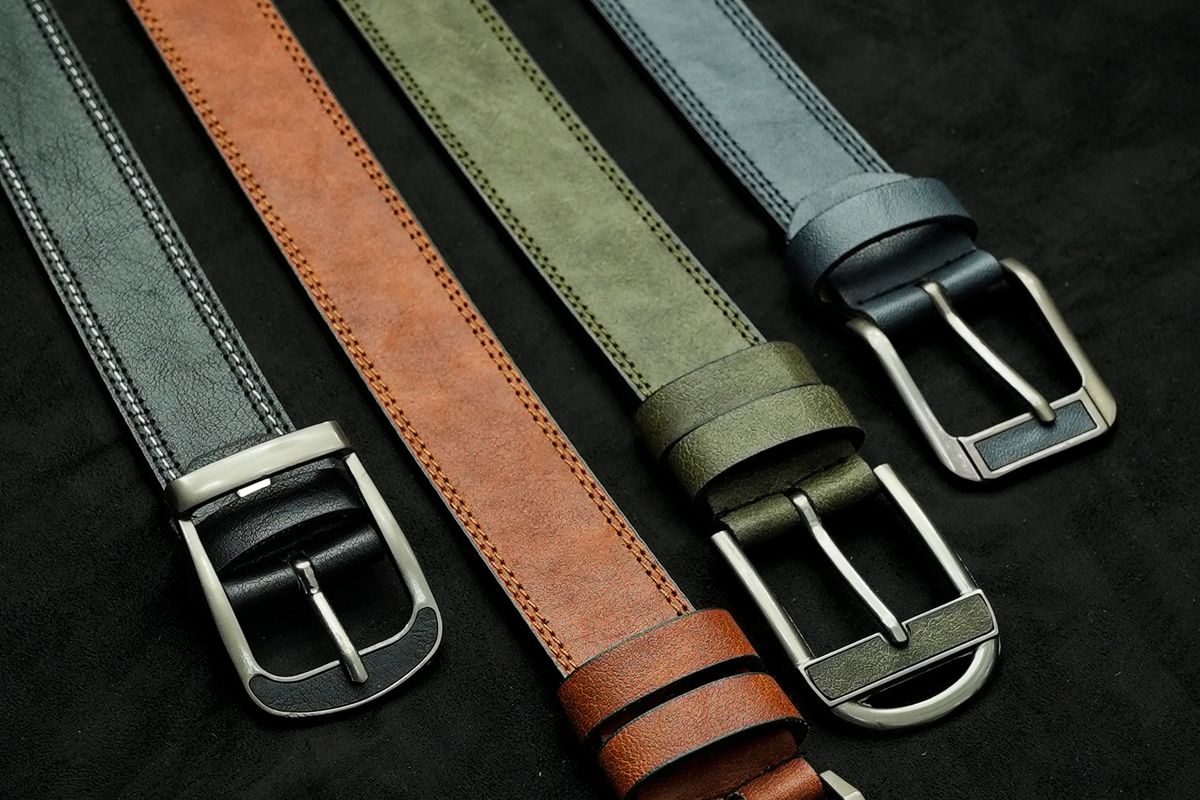
A 34 belt does not fit a 34 waist, and the reason is printed nowhere on the box. The number on the tag describes the strap, the strap wraps a body plus a waistband, and the two measurements point at different holes. Most belt returns are not size errors in the usual sense — they are convention errors, where the buyer and the brand disagreed about what the number means.
What the number actually measures
The honest answer is that it depends on the brand, because there is no single enforced standard for belt sizing. Two conventions compete. The dominant one measures strap length from the fold at the buckle to the hole in the centre of the row, so a belt tagged 34 reaches its middle hole at 34 inches of strap. The second convention measures total strap length from fold to tip, which adds the whole tail past the last hole — several inches longer for the same tag number.
The first convention is what most American and European leather-goods brands use, and it is why the common sizing advice says a belt runs one to two inches above trouser waist size. The strap has to circle the body and the trouser waistband together, and the waistband adds roughly that much circumference. But the margin is a convention, not a law: a belt worn on high-rise trousers sits on a different circumference than one worn on low-rise hips, and a thick leather strap rides outside the waistband while a thin one can sit in it.
This is the same trap that makes size charts unreliable without their footnotes — the number is fine, the measurement point behind the number is what varies.
The measurement that actually predicts fit
One number settles the question: the strap length from the fold at the buckle to the hole actually being worn. Any belt already in the drawer can supply it. Lay the belt flat, hook the tape on the inside of the fold where the strap meets the buckle frame, and measure to the hole the belt currently sits in — not the middle hole, not the last one, the one doing the work. That number, not trouser size, is the figure to take shopping.
The check against a new listing takes a minute. If the brand publishes a size chart with strap lengths, match the measured number to the chart and buy the size whose centre hole lands on it. If the brand publishes only tag numbers with no measurement point, the same discipline that works for garments applies: the measurement travels with the buyer, the tag number stays with the brand, and the two are reconciled at the chart or not at all.
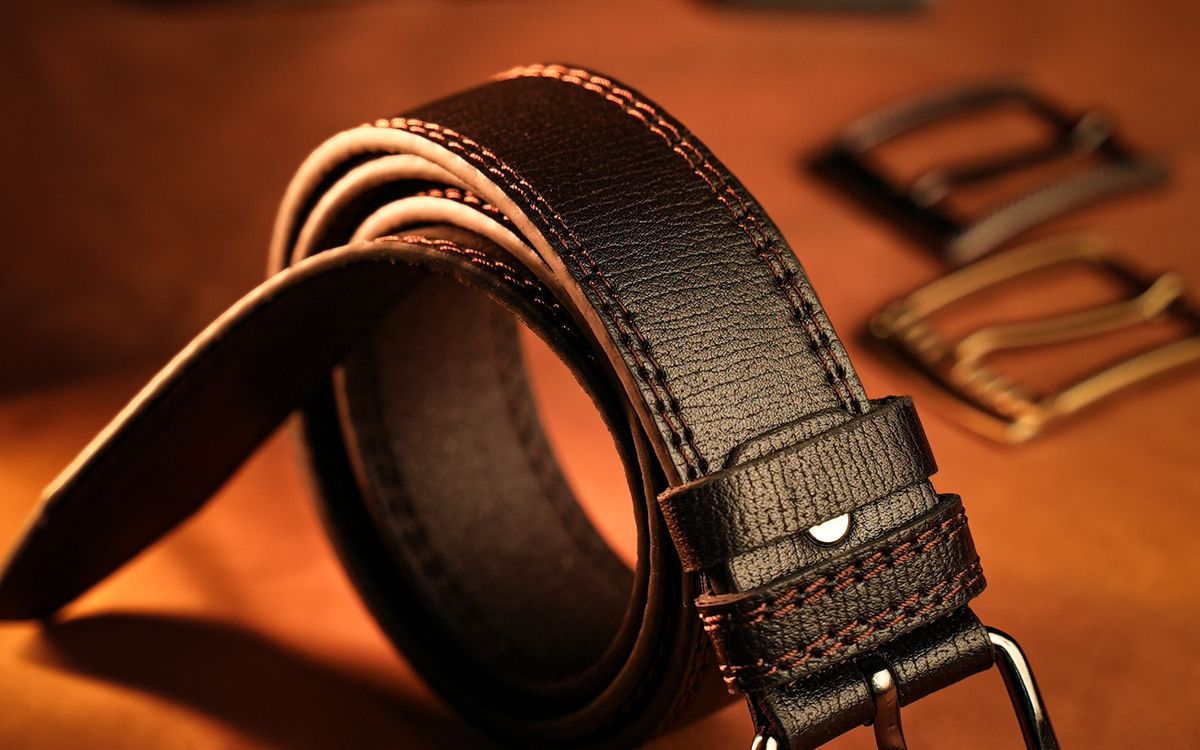
Strap length lives between the fold and the holes; the tail beyond the last hole is where conventions diverge.
Holes, spacing and where the middle actually is
Off-the-rack belts almost always carry five holes spaced one inch apart, which gives a four-inch usable window with two holes on either side of centre. That window is the real product: a belt whose centre hole matches the measured strap length can still be worn one inch tighter or two inches looser, which covers the difference between suit trousers and denim without owning two belts.
The spacing also explains why odd trouser sizes cause complaints. A trouser waist of 33 falls halfway between tag sizes, so either a 32-sized belt (worn at its last hole) or a 34-sized belt (worn at its first) has to carry the fit — and both are at the edge of their window with nothing in reserve. The pragmatic fix is buying for the hole position rather than the tag: whichever size puts the measured strap length on the middle hole is the right one, whatever its tag says.
Buckle choice shifts the calculation slightly. A heavier frame and thicker strap sit prouder of the waistband and consume a little more circumference, which is why a casual 40 mm belt in the same tag size can feel half a size shorter than a thin dress belt — a width effect that compounds the width-to-loop constraint rather than replacing it.
The letter-size problem
Women’s belts are frequently sold in S, M and L instead of inches, and the letters hide the strap length behind a range. A typical size-letter belt spans four to six inches of strap length, wide enough to include the right hole somewhere — but brands do not publish the mapping, so the buyer cannot know whether M centres on 32 inches or 36.
The workaround is the same measurement taken earlier in this piece, applied in the other direction. Reviews and Q&A sections on the product page frequently state where buyers of a known height or waist landed on the holes, which is user-reported and directional, but at least it positions the letter within an inch or two. Brands that publish an inch conversion under the letter sizes are the exception and deserve the sale for it, because the conversion turns a guess back into a measurement.
What breaks the convention
Three situations move a belt off its tag number entirely. Elastic and fabric webbing belts stretch, so they run effectively shorter than their stated length within a season of wear. Reversible belts rotate the strap inside the buckle frame, and the two sides rarely measure identically to the same hole set. And belts sized in centimetres convert cleanly at 2.54 per inch, but some European brands tag the garment measurement rather than the strap, repeating the trouser-versus-strap confusion one unit system over.
Wear itself shortens the window from the other end. Leather compresses at the holes it lives in, and a belt worn two years at one hole develops a stretched slot there and a stiff tail beyond it. A belt bought to sit at its middle hole keeps two positions of adjustment in reserve for exactly this; a belt bought to sit at its last hole has nowhere to go.
Buying the length
Do it in this order. Measure the working strap length on one belt already owned. Pull the new listing’s size chart and buy the tag size whose middle hole matches. If no chart exists, write to the brand or default to the one-to-two-inches-above-trouser-size convention and keep the receipt, because an unverified tag number is exactly the kind of claim this site exists to be sceptical of.
First move: tonight, before anything else, put a tape on the belt being worn right now and write the fold-to-working-hole number somewhere it survives — that single number converts every future belt listing, of any convention, into a one-line decision.
FAQ
- How far up should a belt go past my trouser size?
- A belt worn over trousers usually needs to run one to two inches longer than the trouser waist size, because the strap wraps around both the body and the waistband. Two to four inches is the common convention brands use, but the only reliable method is measuring a belt already worn at a comfortable hole.
- Why does one brand's 34 belt fit and another's does not?
- Because there is no single standard for what the number measures. Most brands size the strap to reach the middle hole at the stated length, but some measure total strap length from fold to tip, which can differ by several inches. The size chart that names its measurement point settles it; a bare number does not.
- How do S, M, L belt sizes map to inches?
- They map loosely and vary by brand, which is why the mapping is unreliable. A size-letter belt usually covers a four-to-six-inch span of strap length, wide enough to fit at more than one hole but not guaranteed to fit well at any. Numeric-inch sizing with a stated measurement point is the more precise convention.
Written by
Nora Finch
I started Dressing Time after one too many orders that came back in the wrong size. Everything here is built from published specifications, brand measurement charts and what owners actually report.
More in Accessories